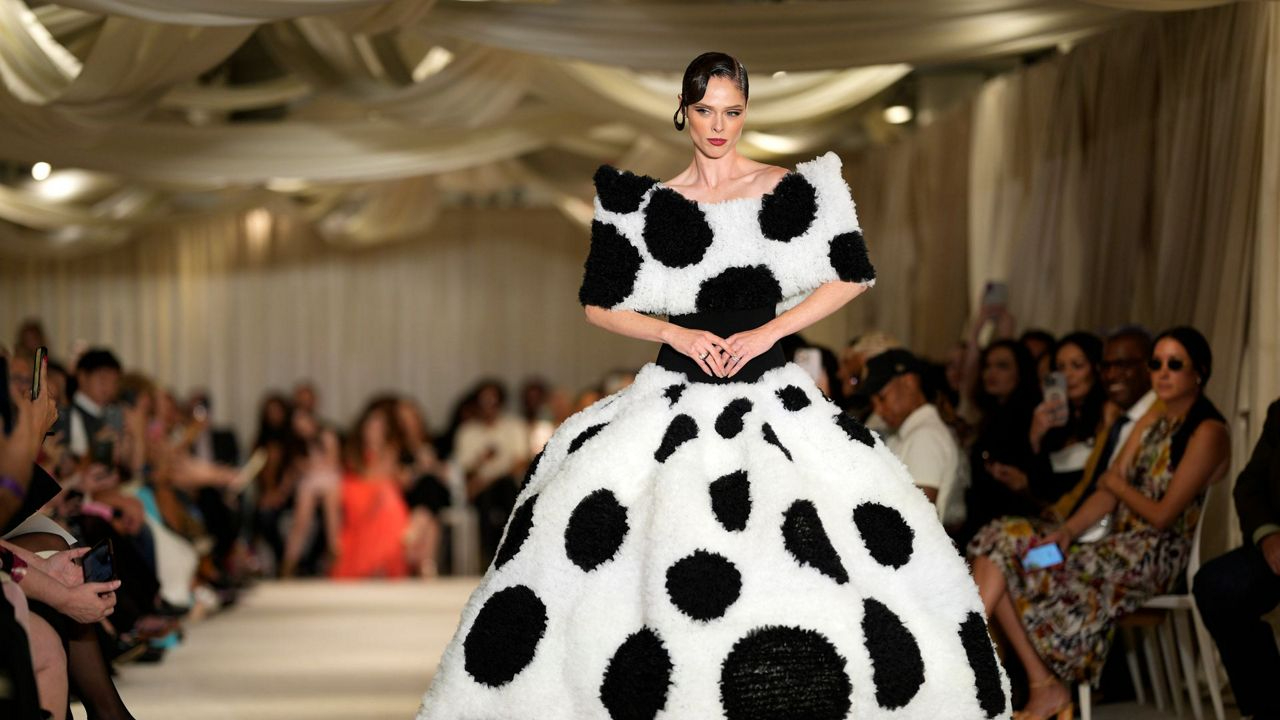
Now that New York Fashion Week has come to an end, its time to dive into what we saw on the runway and the trends that are set to become prevalent in the fashion world.
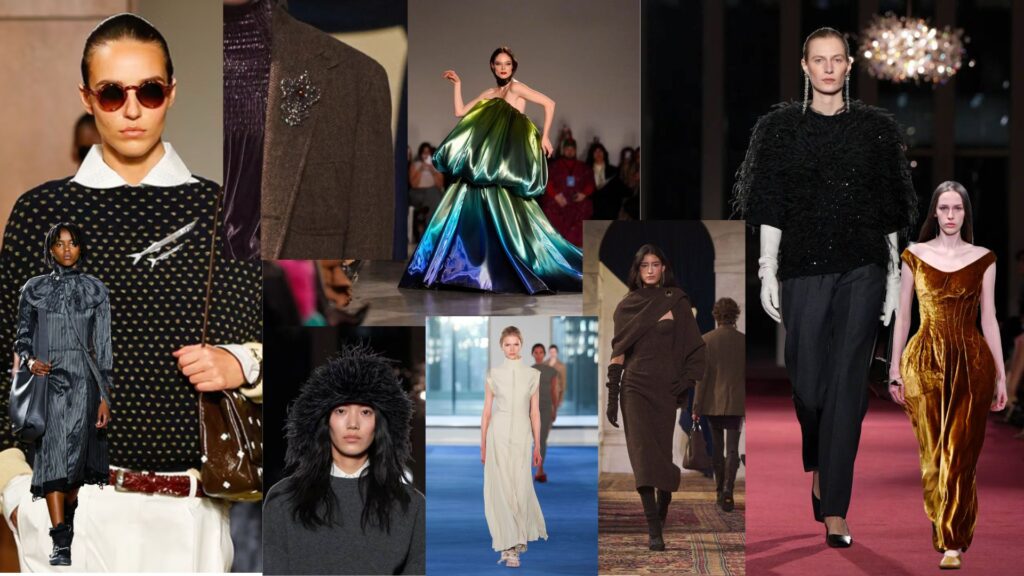
New York Fashion Week is positioned to show the fashion world and consumers whats going to be trending, while also delivering a message that the designer wants to communicate through their collections. While watching the shows, there were many notable observations, from accessories to styling choices that reflected what’s happening in the media and within our society.
What Was Seen on the Runway:
- Statement brooches
- Fish and sardine-inspired details
- High necklines and dramatic neck-covering accessories
- Long leather gloves
- Fringe and feathers
- Capes
What is seen on the runway eventually trickles down into mainstream fashion. Just like in that iconic scene from The Devil Wears Prada, where Miranda explains to Andy how fashion, and editors ultimately influence what everyday people wear. Watching the runway gives us an early glimpse into what will soon appear at retailers like Zara and H&M, before it reaches the racks.
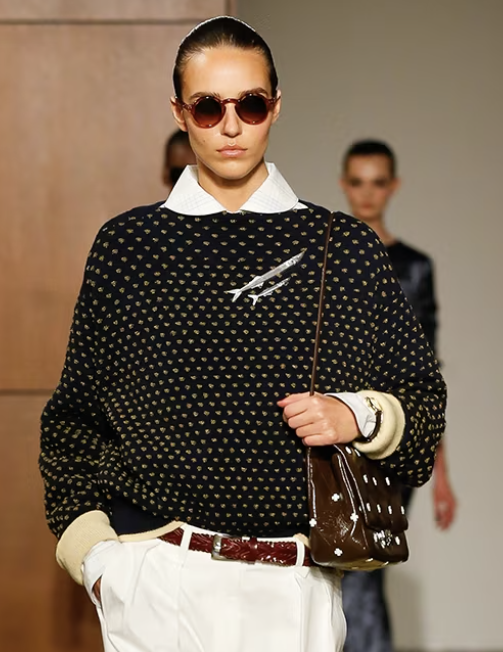
One standout detail seen repeatedly on the runway is the resurgence of brooch accessories, used as a way to add personality and move away from the minimalistic fashion that has been dominated both the industry and social media. Designers like Ralph Lauren, Coach, and Tory Burch each incorporated brooches in distinctive ways.
At Tory Burch, fish and sardine brooches made an appearance, directly tying into the sardine trend that has been gaining momentum on Pinterest and TikTok. Beyond aesthetics, brooches also served as a practical purpose. At Ralph Lauren, some appeared to be pinned strategically to secure a draped scarf cape over the model’s shoulder, blending functionality with fashion. This duality is decorative yet useful and makes the brooch feel more modern rather than purely vintage.
Fringe and feathers were also very prominent on the runways, but this season they expanded beyond just bags and garments, as seen in previous years. Designers are now incorporating these textures into shoes and hats, pushing the trend even further. Under newly appointed creative director Rachel Scott, the Proenza Schouler show demonstrated this shift by showcasing shoes detailed with fringe along the sides, proving that embellishment is no longer limited to clothing. Michael Kors, on the other hand, embraced feather in an exaggerated, head-to-toe approach sending models down the runway in fur hats, a feathered shoes.
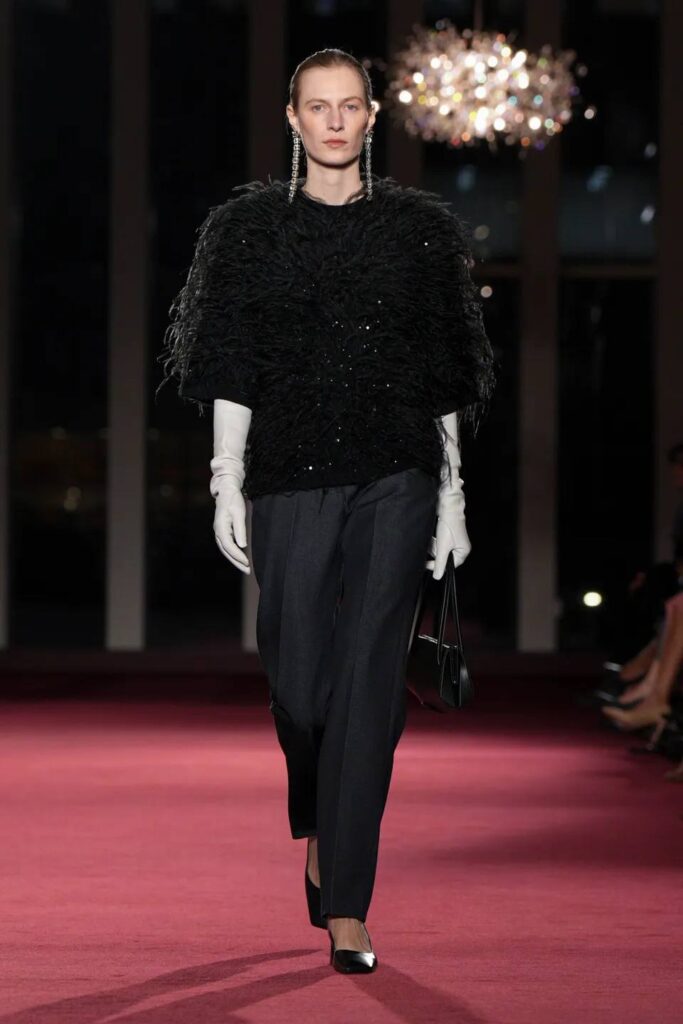
Another accessory that continues to gain momentum is the long leather glove. While we first saw long length gloves dominate red carpets around 2020 — worn by celebrities like Ariana Grade at the Grammys and Olivia Rodrigo at the Met Gala, the style has now transitioned from formalwear into a runway staple, particularly in leather.
Designers such as Ralph Lauren, Micheal Kors, Pamella Roland, and 7 For All Mankind incorporated long leather gloves into their Fall/Winter 2026-2027 collections, reinforcing the accessory’s evolution. What was once reserved for evening gowns and black tie events is now being reimagined in a more contemporary way, shifting into everyday styling. The transformation signals how designers are redefining classic glamour for modern wear.
A styling choice that kept coming up this season was the emphasis on high necklines and bold accessories that framed or covered the neck. Ralph Lauren leaned into this with neck scarves, while Troy Burch introduced a variation through a sweater neck-closure detail. Micheal Kors took the idea even further, exaggerating the look with buttoned up collars, dramatic scarves, and classic turtlenecks. Christian Siriano offered an especially creative interpretation. Although many of his designs featured strapless or lower necklines, the models’ hair was styled intentionally to cover their necks, subtly reinforcing the overall theme of coverage.
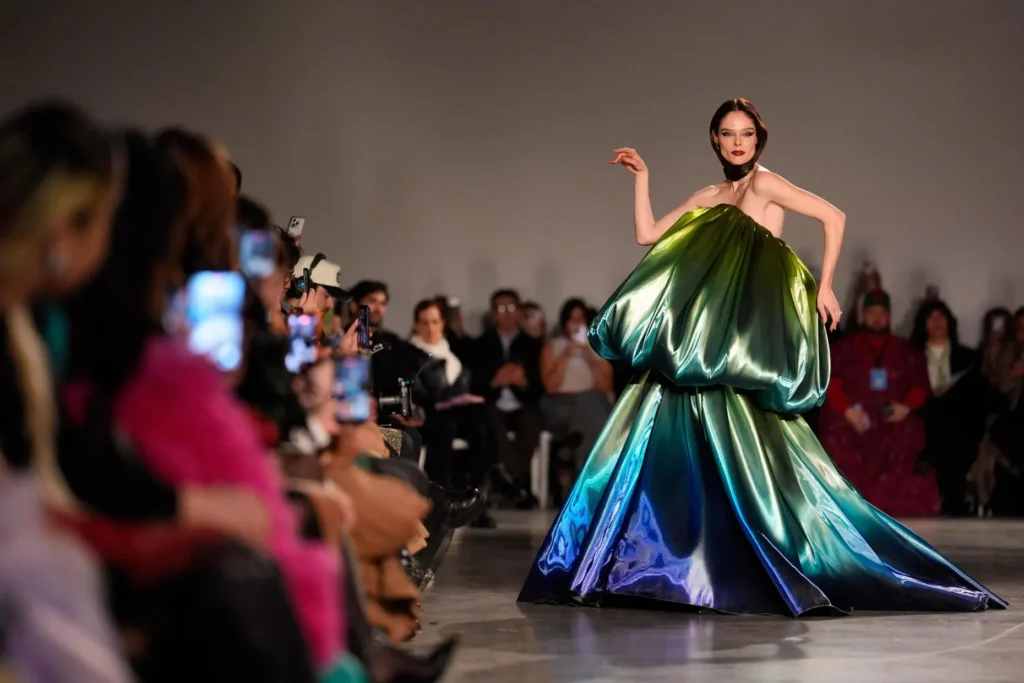
With necklines covered and accessories drawing attention upward, this shift could also reflect the current cultural climate. In a time marked by political chaos and constant, often heartbreaking news cycles, fashion may be responding with a sense of protection and reservation. The physical act of covering the neck, one of the body’s most vulnerable area, can feel symbolic.
Separate from the neckline focus, capes also made a strong appearance this season, often attached to dresses and jackets, adding drama and movement on the runway.
The runway this season proved that fashion is both cyclical and reactive. Designers are reviving past elements and reshaping them for 2026, while also responding to the cultural and media landscape that surrounds us. The result is a season defined by reinvention, where nostalgia meets modern emotion, and style becomes a reflection of the times.