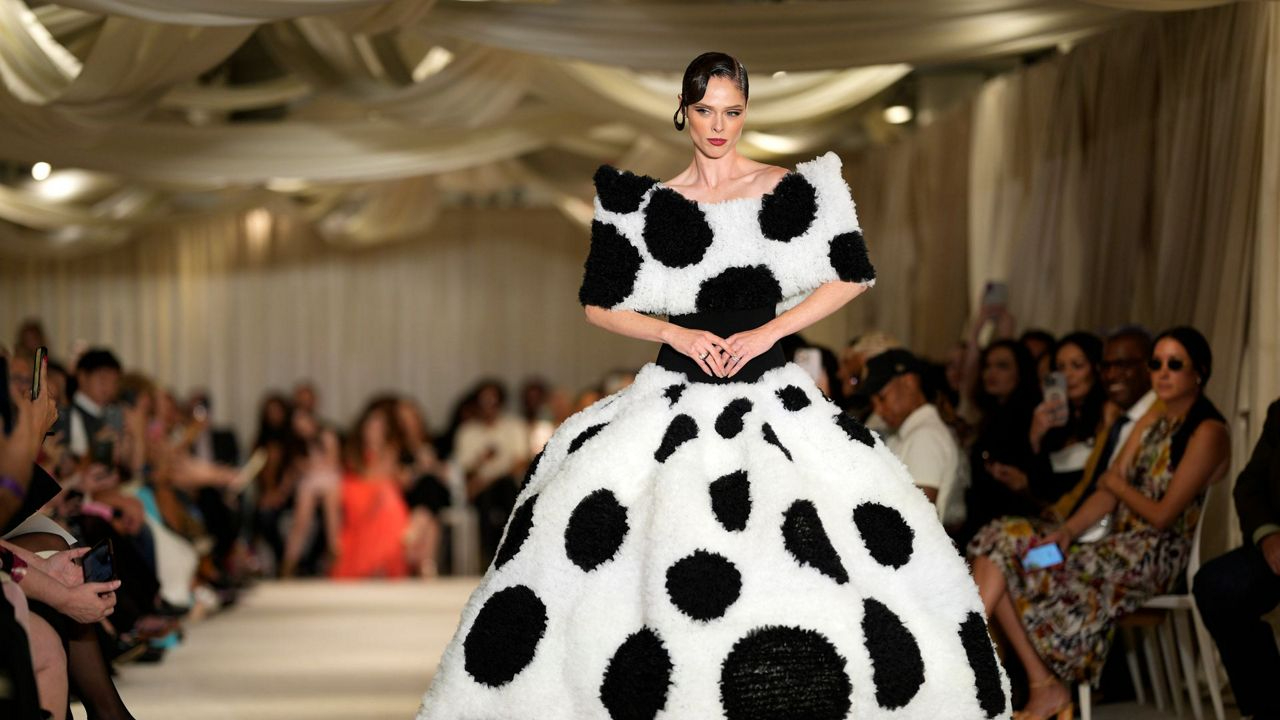
Clothing is a significant part of personal identity. It allows individuals to express themselves in a unique and personal way, offering a glimpse into how they choose to present who they are. But if people care deeply about how they look and the outfits they wear, do they give the same level of thought to what those pieces are actually made of?
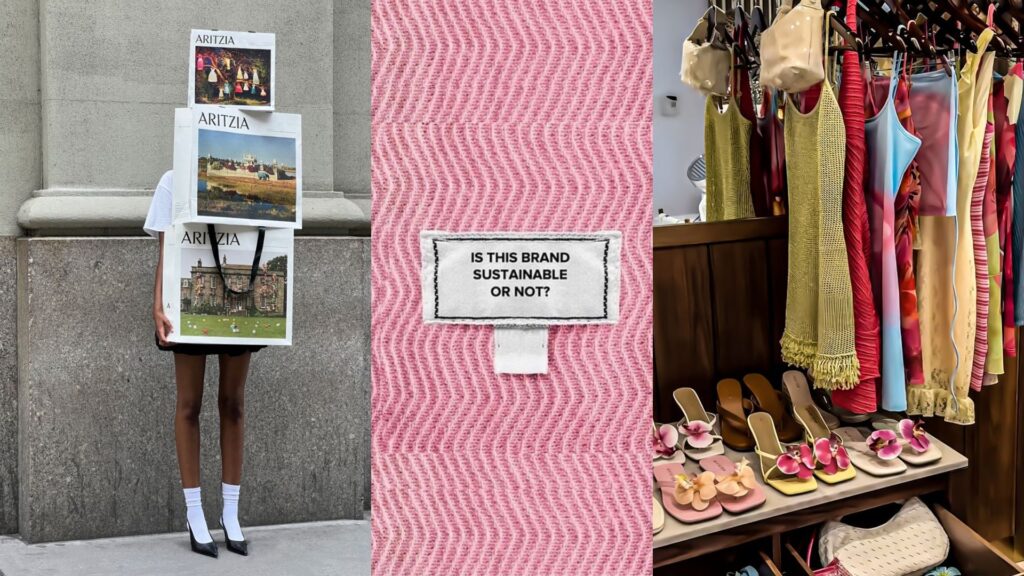
The other day, I walked into Printemps to see what brands and pieces were currently drawing consumer attention. The shelves were filled with emerging labels, many of which I didn’t recognize. As I moved through the racks, I started examining the fabric compositions — and I was surprised to find that much of the clothing was made from 100% polyester.
The shock wasn’t only because polyester is a synthetic fiber derived from plastic, contributing microplastics to our water systems. It was also because consumers are paying premium prices for garments made almost entirely of plastic rather than higher-quality materials. It raises a larger question: do consumers and fashion enthusiasts consider what goes into the clothes they wear? And are they comfortable paying luxury prices for fabrics that may not reflect that cost?
To find real answers, I decided to investigate further. First, I wanted to see which brands were relying on synthetic fabrics in their collections. I took a trip to Fifth Avenue to look more closely. I visited several fast fashion retailers — you know the ones: Zara, Aritzia, H&M, and Abercrombie & Fitch.
Heres what I found out:
Aritzia and Zara stood out the most — largely because of their price points compared to the fabric quality. At Aritzia, for example, I came across a blazer priced at $245 that was made from 100% polyester. At that price, consumers might reasonably expect natural fibers such as cotton, silk, cashmere, or at least a higher-quality blend.
Zara was similar, if not more extreme. Much of the merchandise I examined was either entirely polyester or composed predominantly of synthetic blends, often mixed with fibers like viscose. Despite this, the pricing felt high for a fast-fashion retailer relying so heavily on plastic-based materials.
To be fair, both brands do carry pieces made from natural fibers or blended fabrics. However, the broader concern lies in items such as “leather” jackets made from 100% polyester or other synthetic combinations being sold in the $100–$200 range. The disconnect between material and price is difficult to ignore.
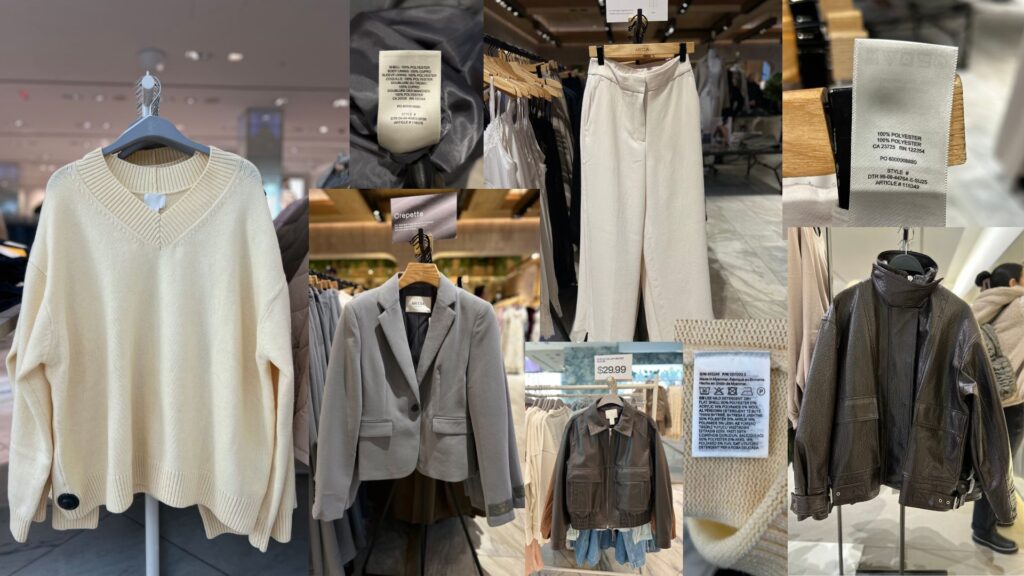
I was ultimately surprised by what I found at H&M and Abercrombie & Fitch. H&M does use synthetic fabrics in many of its pieces, but I noticed several items that were blended rather than entirely polyester. Abercrombie & Fitch, however, stood out in a different way. The store carried multiple pieces made from 100% cotton, many priced in the $60–$70 range.
It’s not only brands like Zara and Aritzia relying heavily on synthetic fabrics. Many of the newer labels I saw at Printemps were also producing garments made entirely from polyester. As a luxury department store, Printemps carries brands positioned as high-end, often at elevated price points. However, premium pricing does not necessarily align with premium fabric quality. The use of synthetic materials raises questions about what “luxury” truly represents today.
Why brands are making clothes primarily from synthetic fabrics now?
Polyester, in particular, has become the dominant fiber seen on retail racks. Many companies continue to rely on plastic-based materials, with polyester leading the shift. According to Szoneier Fabrics, polyester accounted for 54% of the global fiber market in 2024. In 2025, that share increased by an additional 5%, bringing it to 59%. The growth is not accidental. Polyester is often favored for its durability, resistance to shrinking, and stretch retention. It is also significantly less expensive to produce than natural fibers such as cotton or wool. While some brands do offer garments made from natural materials, the use of natural fibers alone does not guarantee ethical labor practices or responsible production.
Do consumers care about fabric content while shopping?
I created a poll on Instagram and went to SoHo to ask people whether they cared about the fabric content of a clothing item before purchasing it.
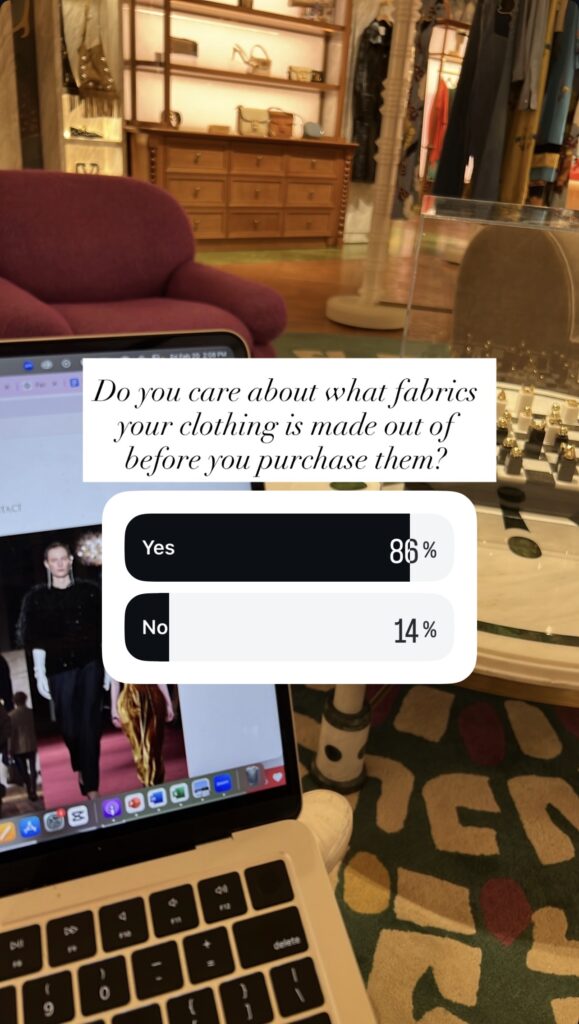
What I found was that the majority of respondents — both online and in person — said they do consider fabric before buying. However, there were still people who admitted they focus primarily on style rather than material when making purchasing decisions.
Those who work in fashion, study it, or actively follow industry conversations seemed more likely to pay attention to fabric content and ethical sourcing. In contrast, people who have not been educated about textile production or the environmental and skin-related impacts of certain materials were less likely to consider it at all.
Between 2021 and 2022, social media — particularly TikTok — saw a rise in conversations around fast fashion brands like Shein. Users began highlighting the environmental consequences of overproduction, especially as Shein pieces increasingly appeared in thrift stores such as Goodwill. The concern was not only about quality, but about the larger cycle: trend-driven consumption leading to excessive waste, with garments ultimately ending up in landfills.
Still, awareness does not always translate into action. Some consumers acknowledge the issues but continue purchasing synthetic or fast-fashion items because of affordability or a strong preference for a particular style.
Consumers are becoming more aware of what their clothing is made from, and there is a clear shift toward greater transparency and consciousness around fabric content. Yet brands continue to rely heavily on synthetic materials, even as prices climb and sustainability conversations grow louder.
The question now isn’t just whether people care — which many say they do. It’s whether that awareness will be strong enough to influence what brands choose to produce next.