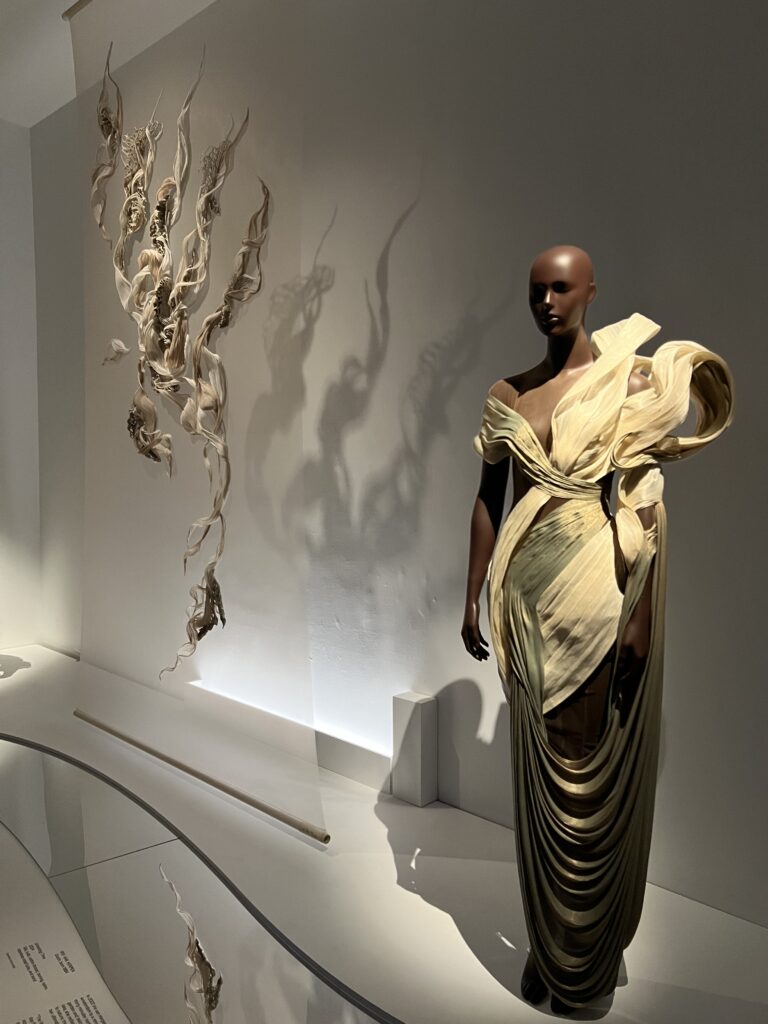
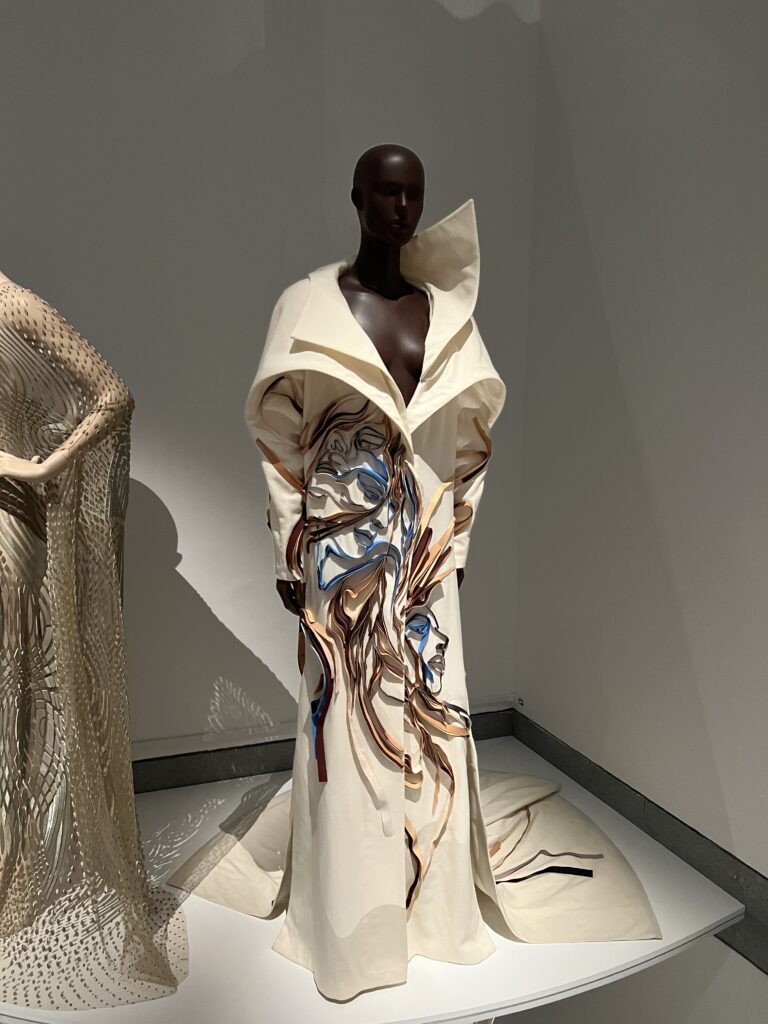
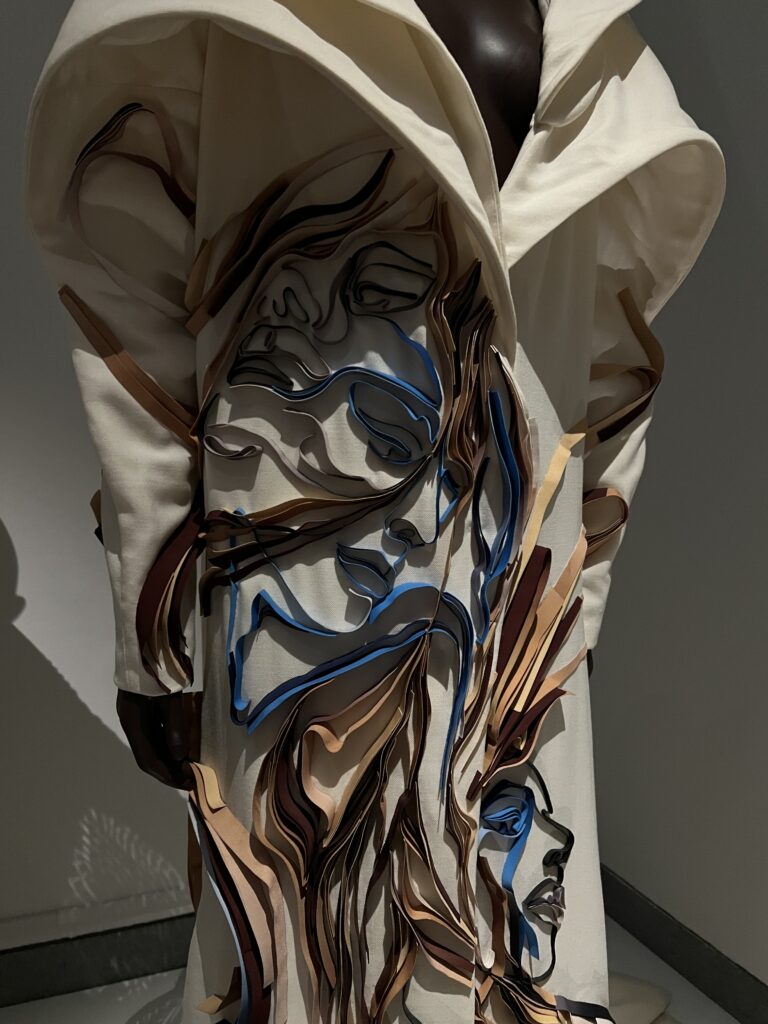
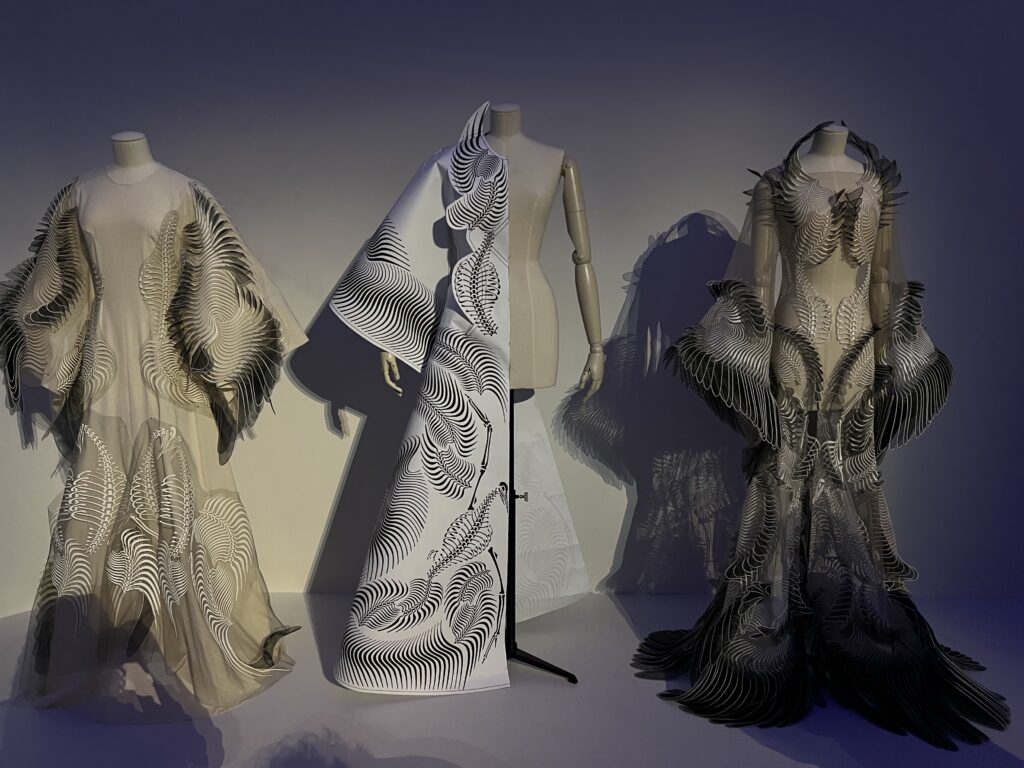
The intersection of fashion, nature, and technology can create beautiful sculptural garments. Avant-garde fashion is more than extravagant gowns, it can be a fusion of exaggerated silhouettes, science, innovation and technology.
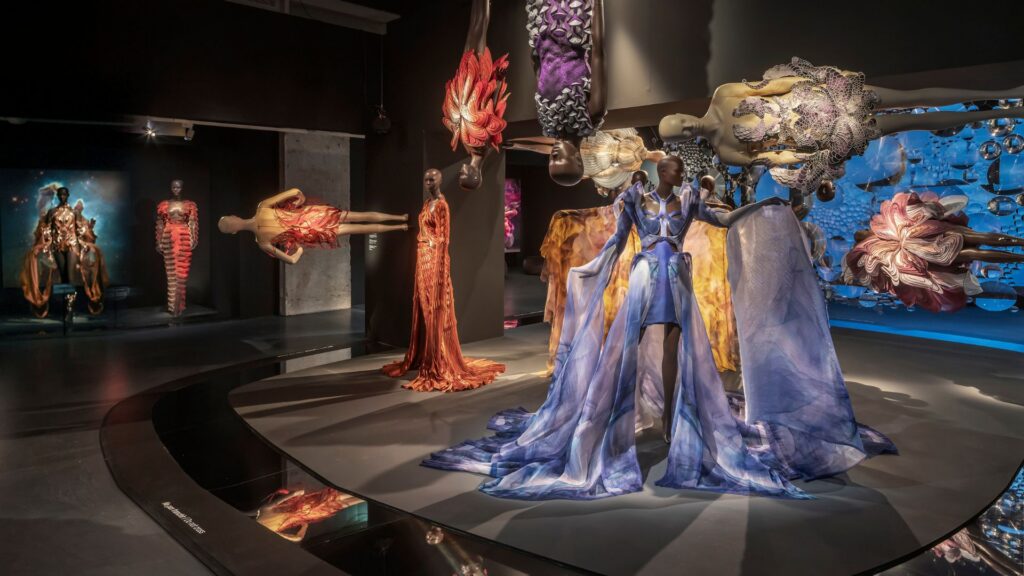
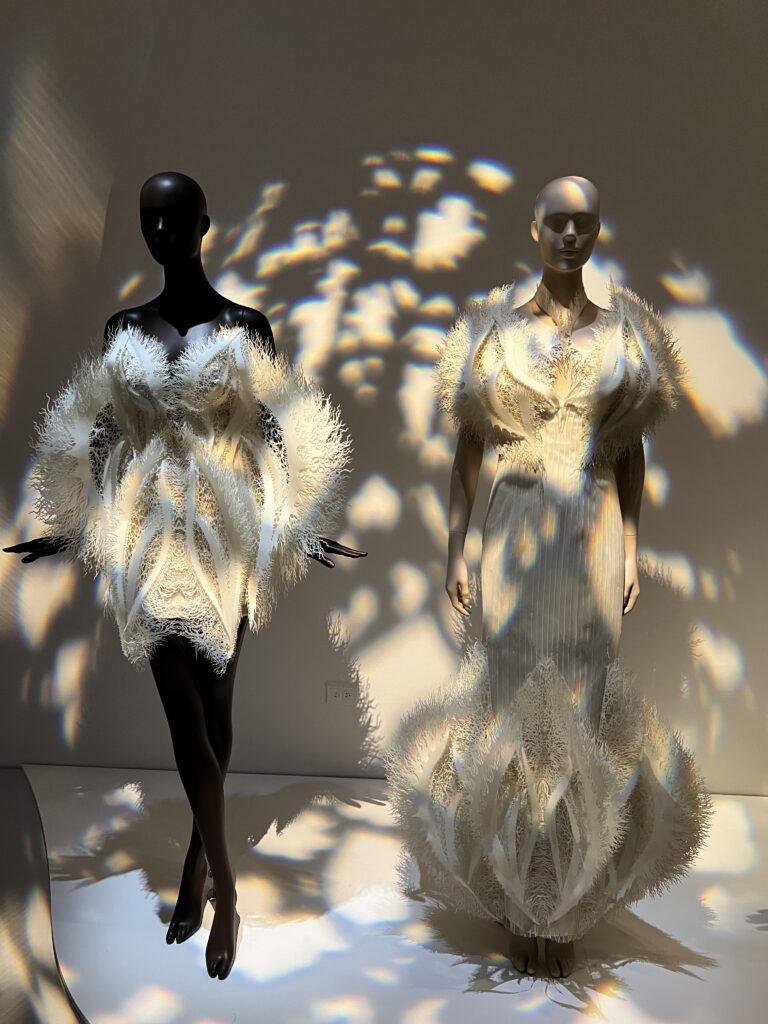
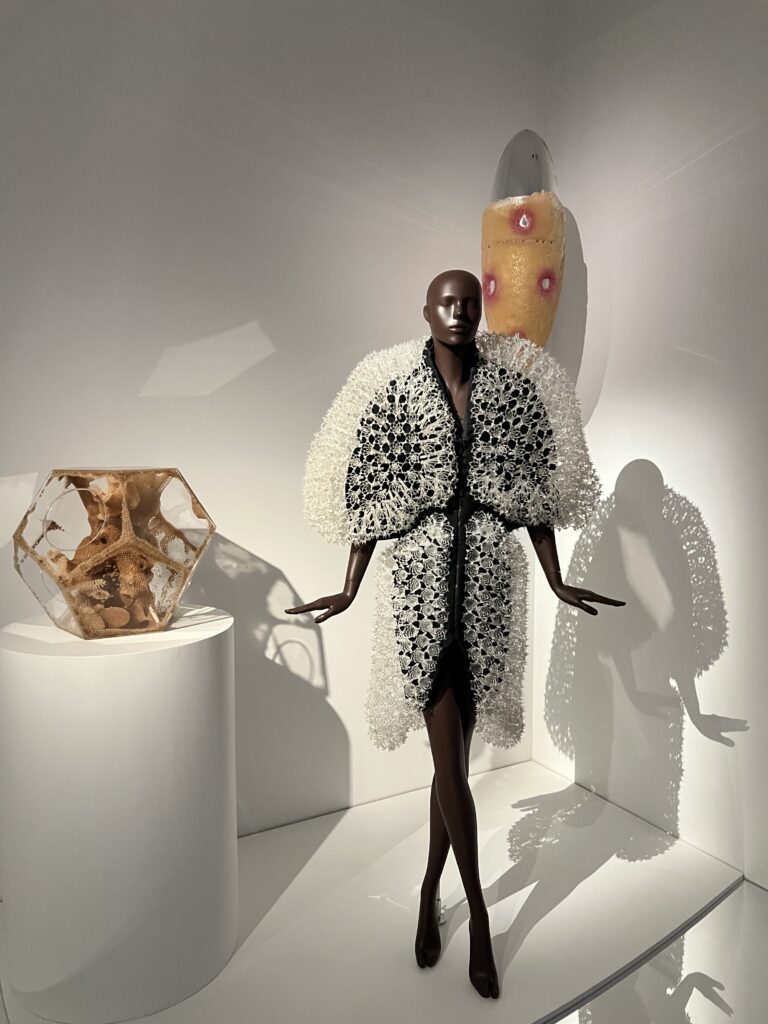
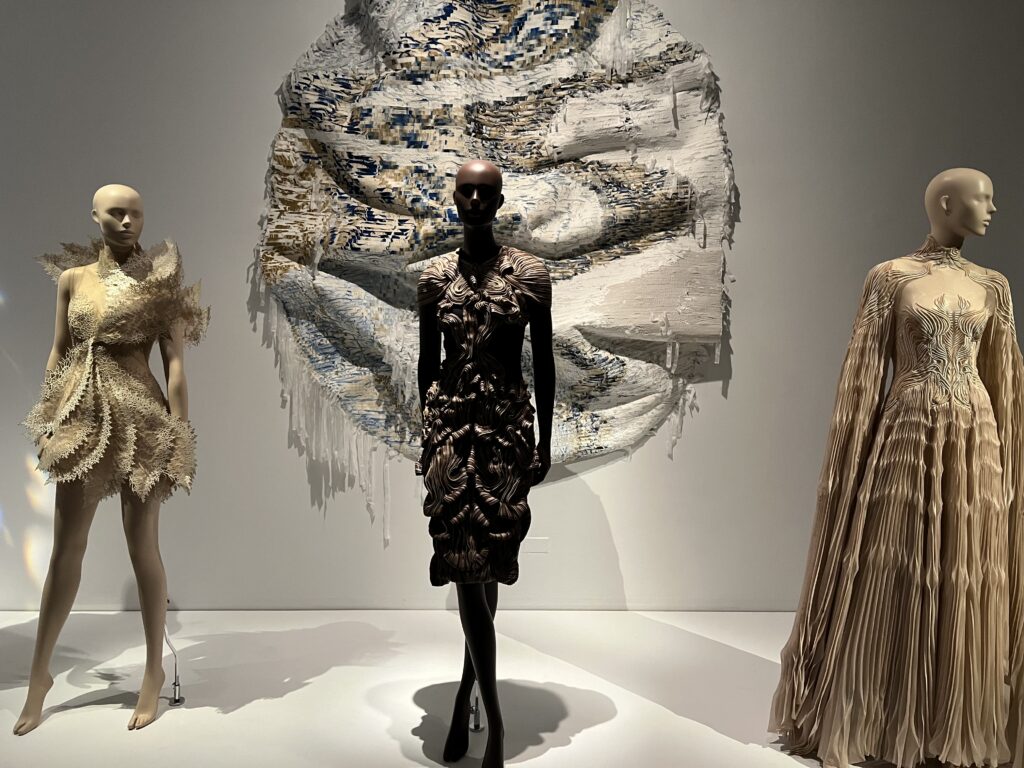
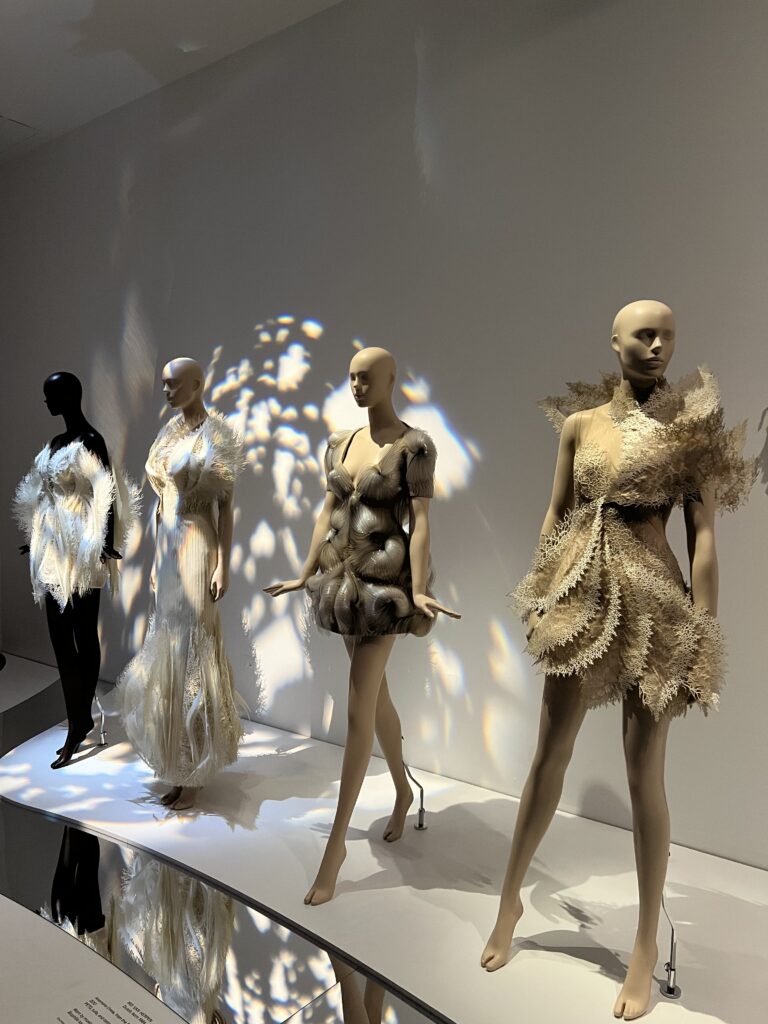
On May 16, Iris van Herpen’s Sculpting the Senses exhibit opened at the Brooklyn Museum. Going into the museum, I expected to see only a few pieces by the haute couture designer displayed in a small room. However, I was pleasantly surprised to discover an expansive exhibition instead. Located on the museum’s fifth floor, the exhibit occupied its own dedicated space.
Sculpting the Senses
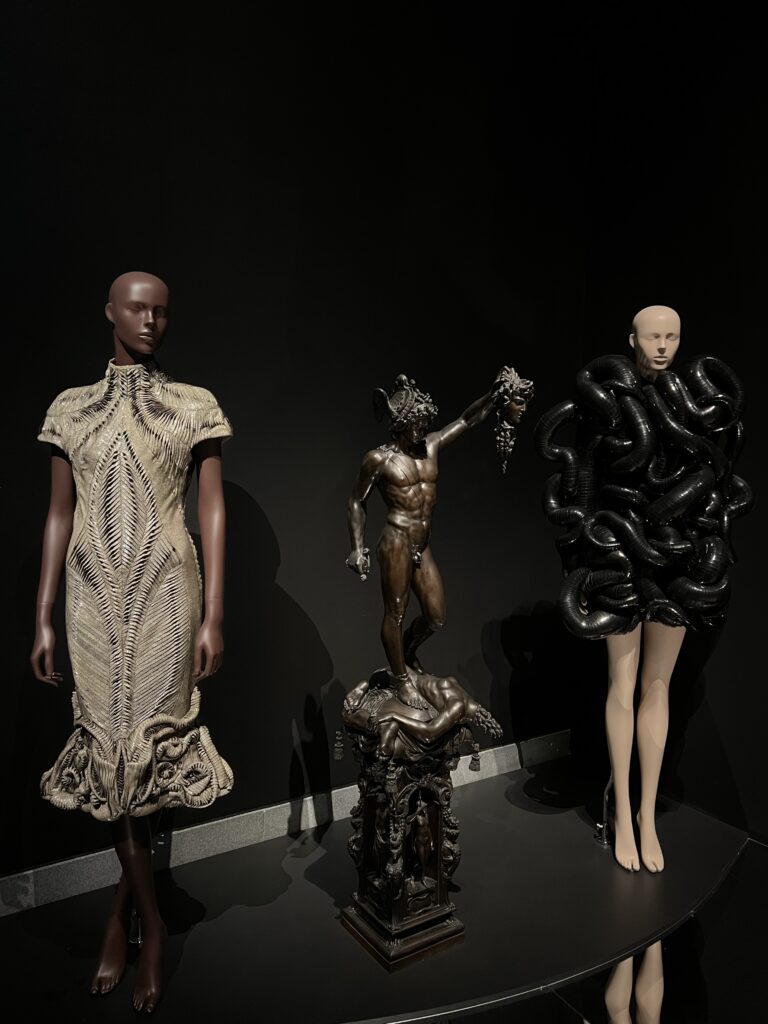
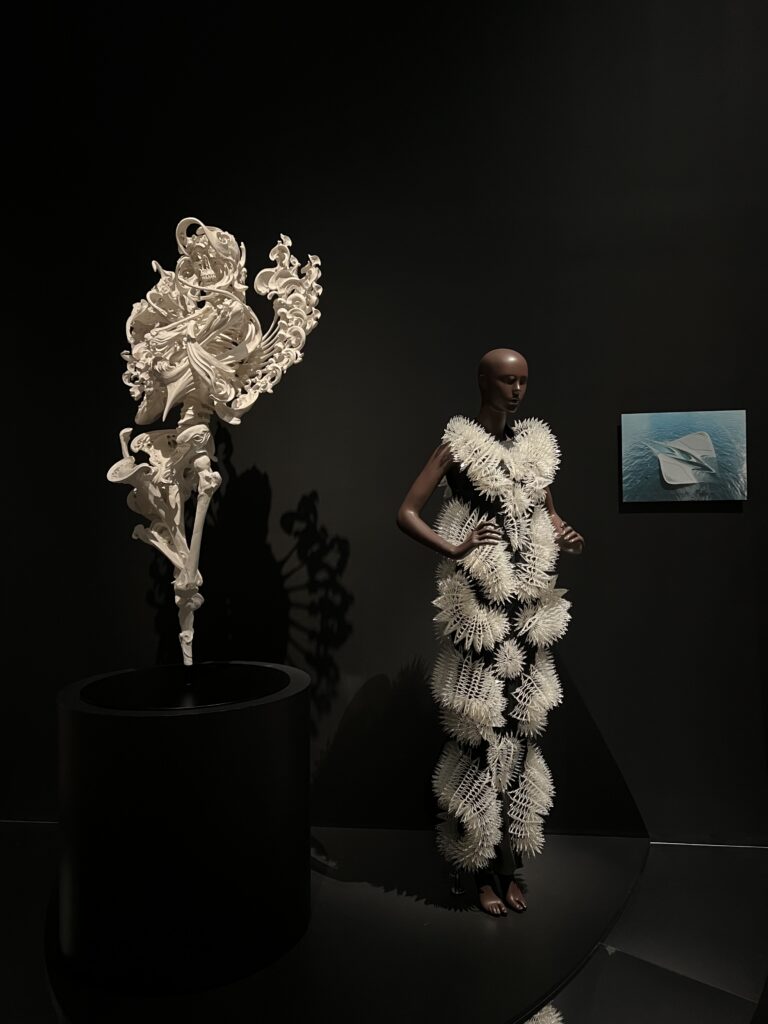
The exhibit begins by introducing the meaning and message behind Sculpting the Senses while also providing insight into Iris van Herpen’s work. It dives deep into van Herpen’s practice and asks questions about the body, identity, and the future of an ever-changing world. The exhibit explains that “a pioneer in the use of cutting-edge technologies, Iris van Herpen defies the limits of fashion design by integrating traditional couture craftsmanship with innovative materials and techniques.” Throughout the exhibition, visitors are able to see how van Herpen transforms scientific concepts and natural events into couture.
Viewing multiple collections and pieces from van Herpen’s artistry was breathtaking, but a few garments especially stood out to me because of the inspirations and scientific concepts behind them. These particular looks not only showcased innovative craftsmanship, but also deepened my understanding of the connections between fashion, science, nature, and technology.
Seijaku Collection – AW 16/17
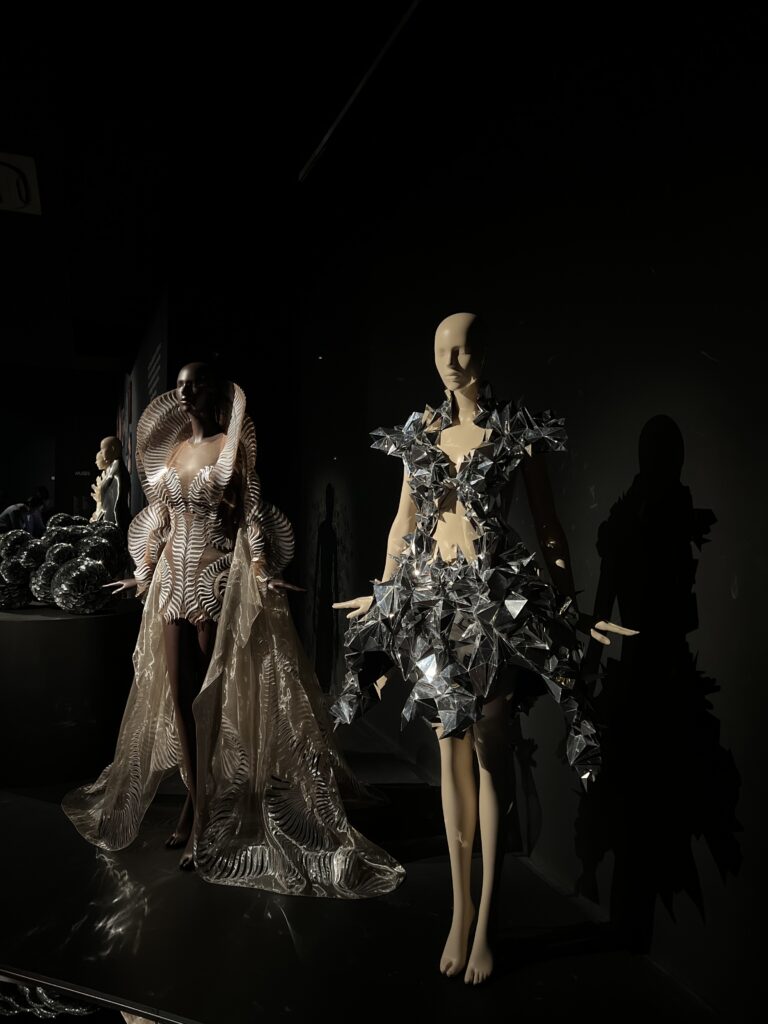
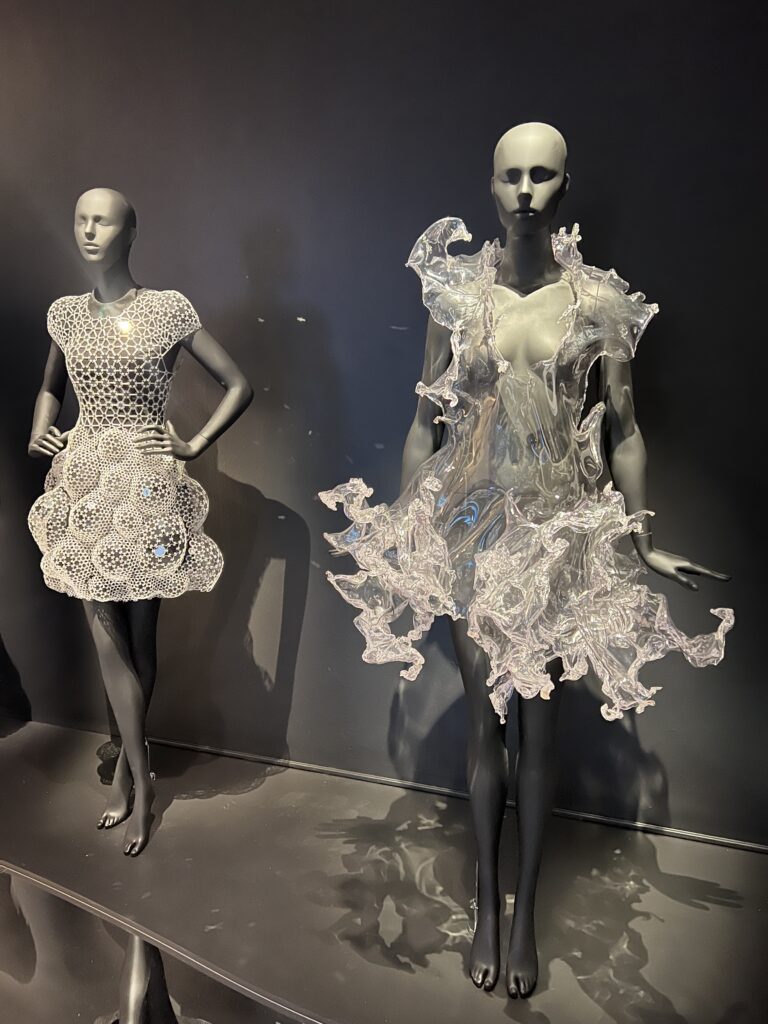
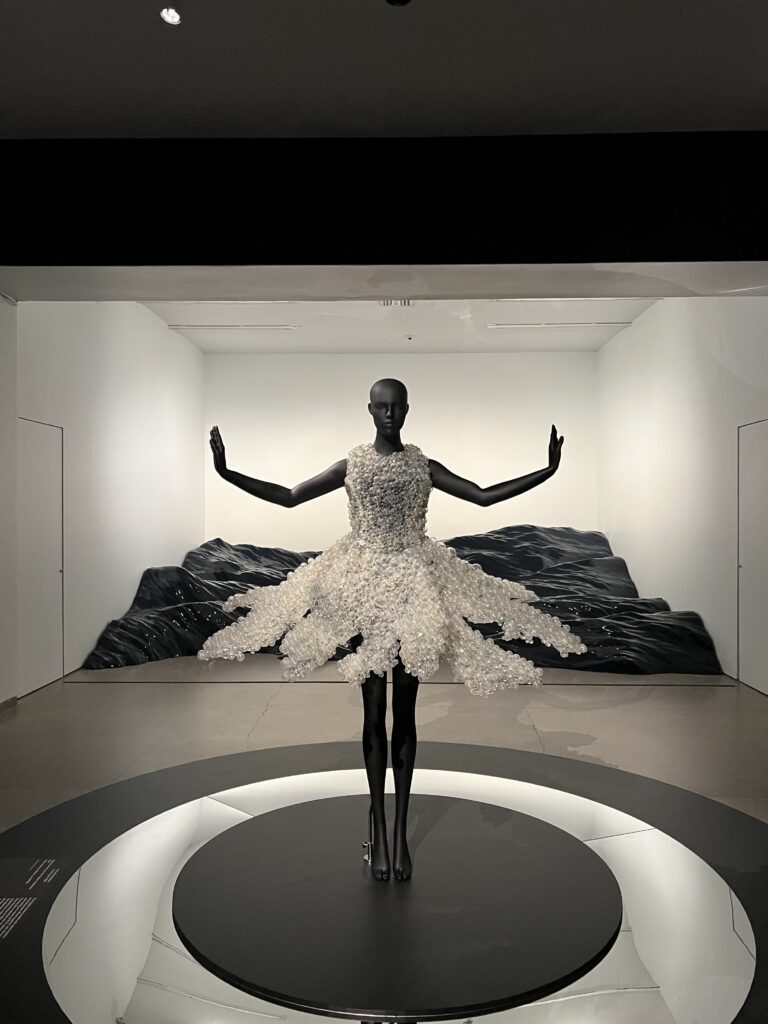
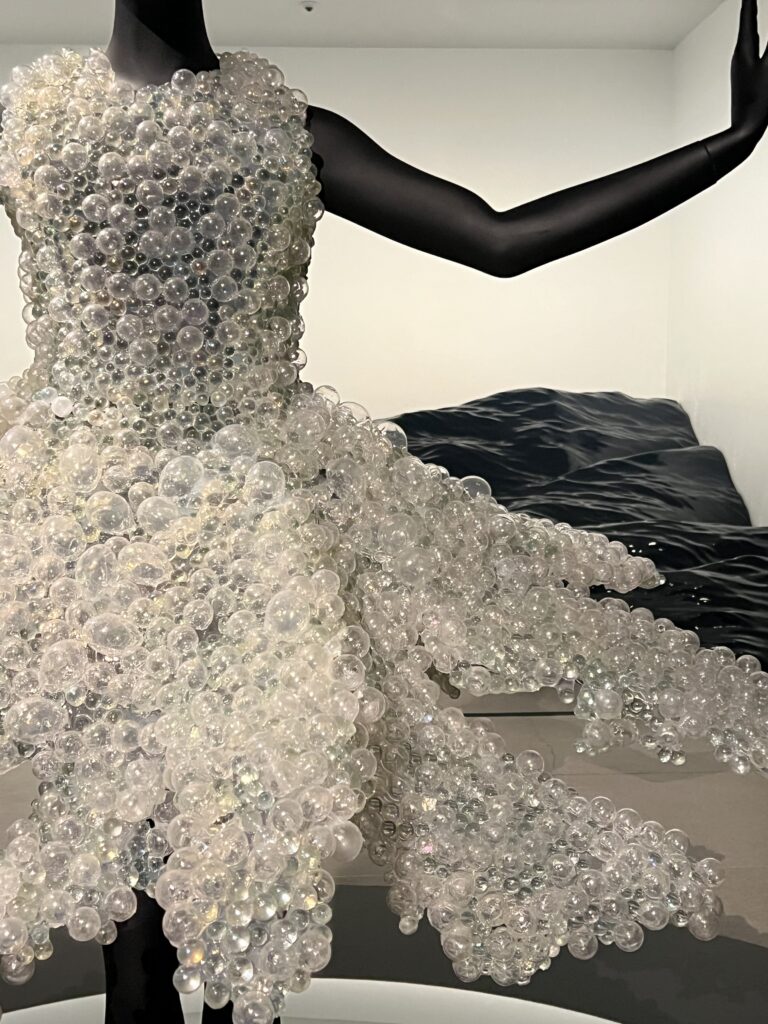
The first garment on display was the 2016 Bubble Dress, created in collaboration with the Tokyo-London art studio A.A. Murakami. The piece resembles the Airo dress worn by model Eileen Gu at the 2026 Met Gala. To further immerse visitors in the experience, the exhibit featured an ocean-inspired atmosphere with visuals of water and ambient ocean sounds playing in the background.
Sympoiesis Collection- AW25
Continuing through the exhibit, visitors encounter the Living Algae look from the 2025 Sympoiesis collection, created in collaboration with biodesigner Chris Bellamy.
Bioluminescent algae are single-celled marine organisms known as dinoflagellates that naturally emit blue or green light when disturbed. In nature, this glow acts as a defense mechanism, startling predators or attracting larger creatures that will attack the algae’s predators. By incorporating this living organism into fashion, van Herpen blurs the boundaries between biology, technology, and couture.
The garment itself is displayed in a temperature-controlled case designed to keep the algae alive. Featuring intricate white cutouts and mesh that trace the contours of the female body, the design is paired with an iridescent cape that fades into a soft light-blue ombré at the hem. Created using 125 million living bioluminescent algae embedded within the structure of the garment, the piece emits light in response to the wearer’s movements, making the dress feel almost alive, similarly to the defense mechanism the algae use when agitated. The fusion of the human body with a living organism symbolizes the connection between humanity and the natural world, a recurring idea throughout van Herpen’s work.
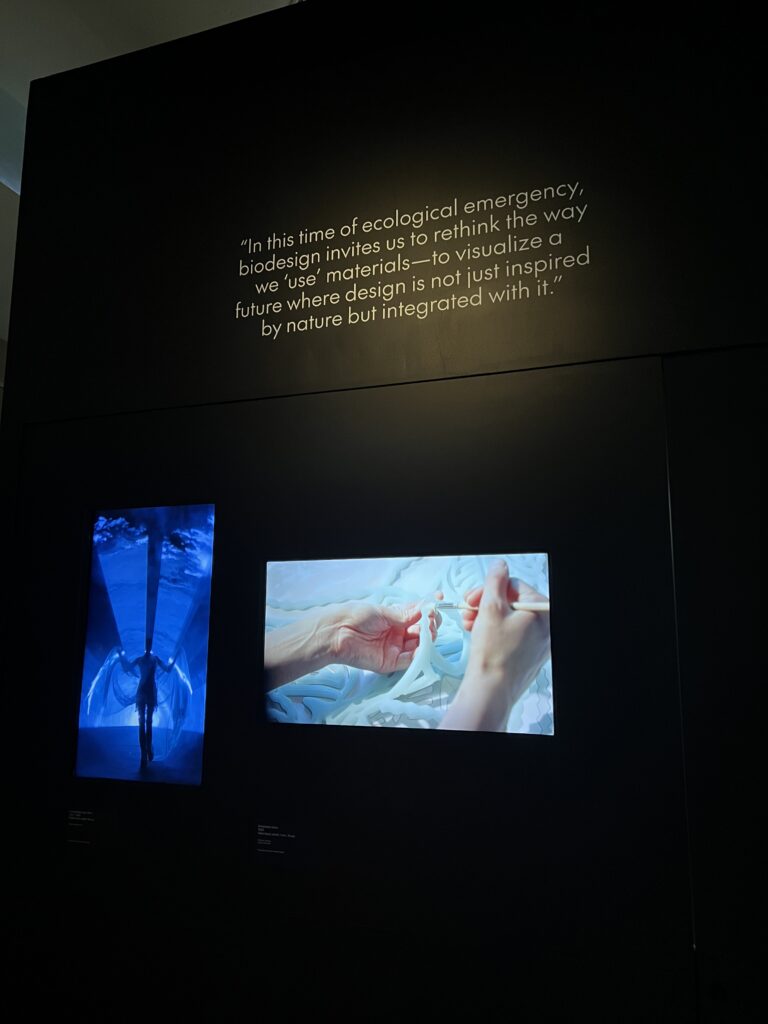
One of the most compelling aspects of the exhibit is the inclusion of videos showcasing how some of the garments were created. The Living Algae look was featured as part of the behind-the-scenes process, giving visitors a closer look at the craftsmanship behind the designs.
These videos highlight the meticulous time, dedication, and innovation involved in creating each piece. By visually showing the process, the exhibit allows audiences to develop a deeper appreciation for the garments and the artistry behind them.
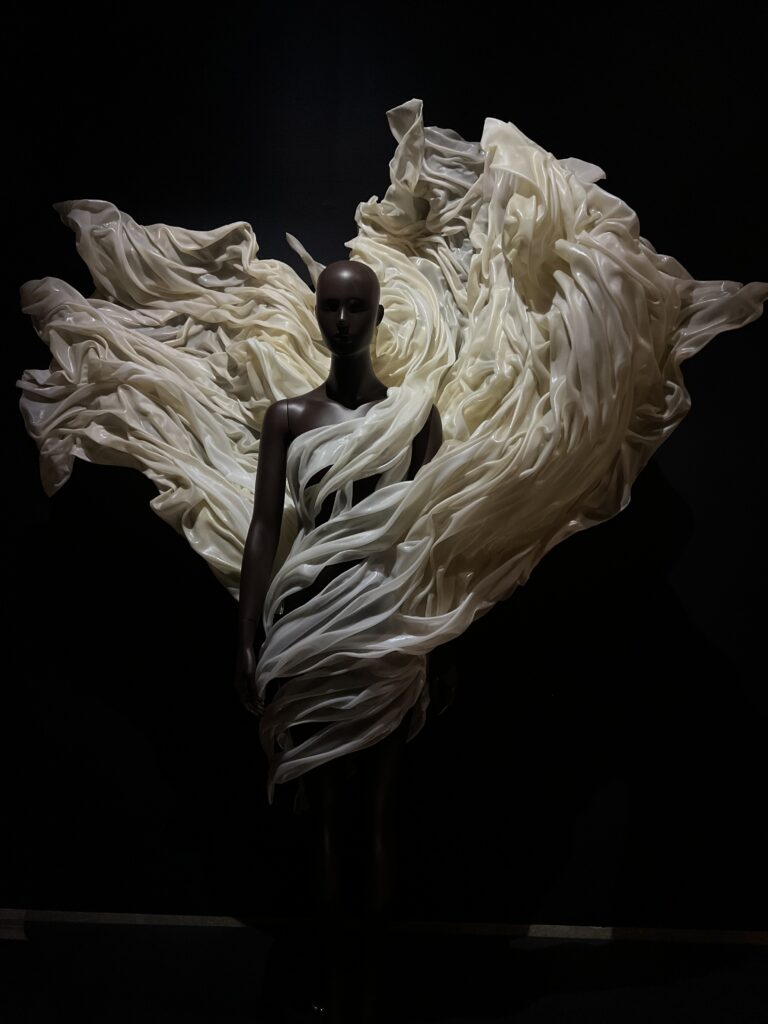
Roots of Rebirth Collection – SS21
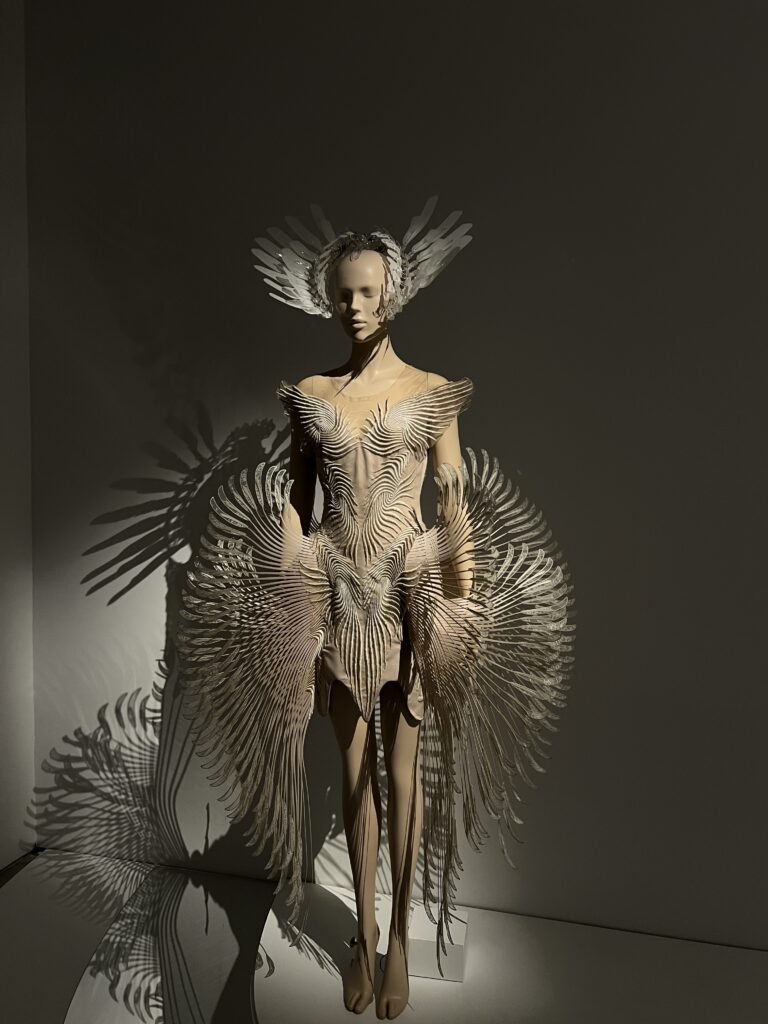
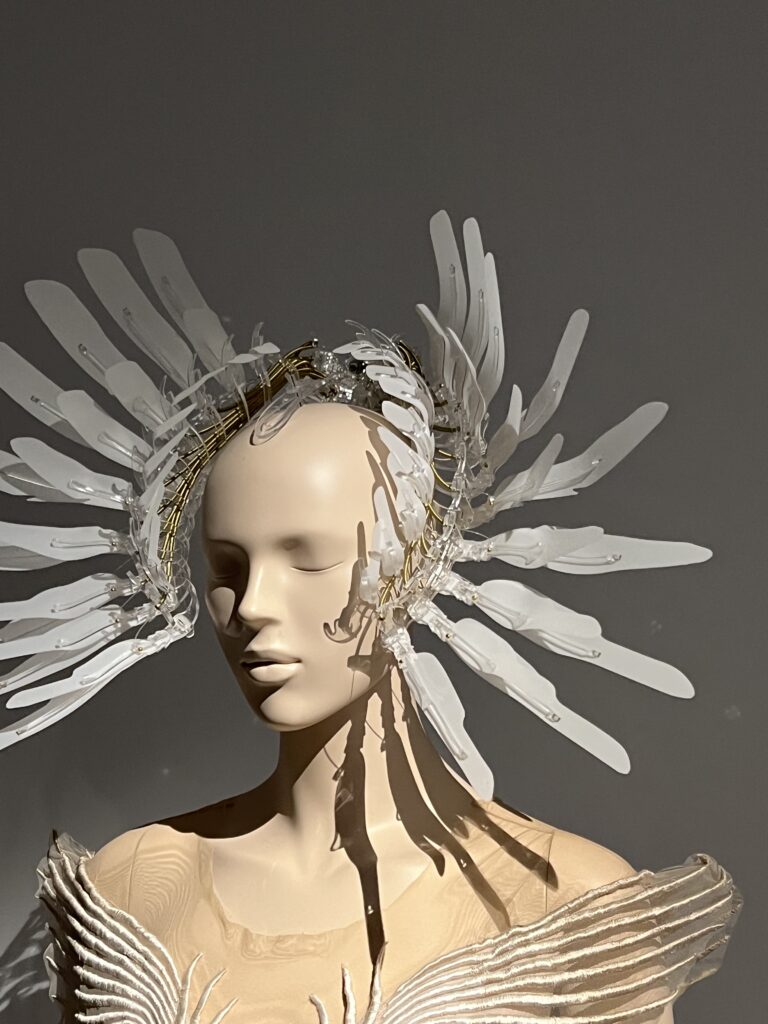
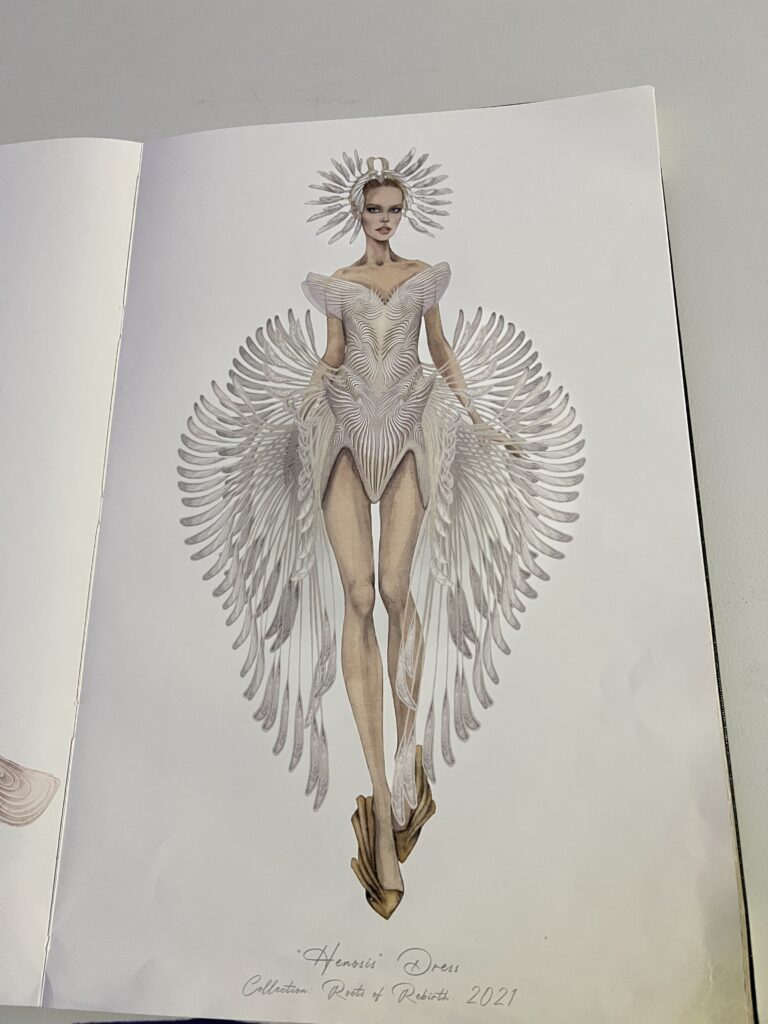
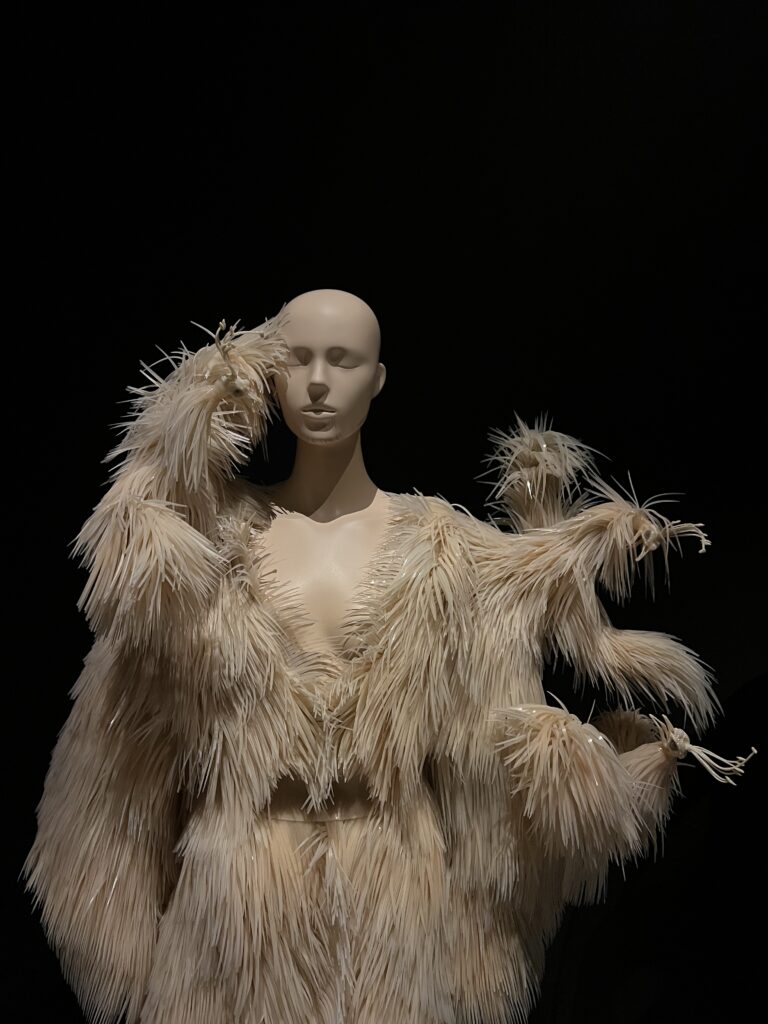
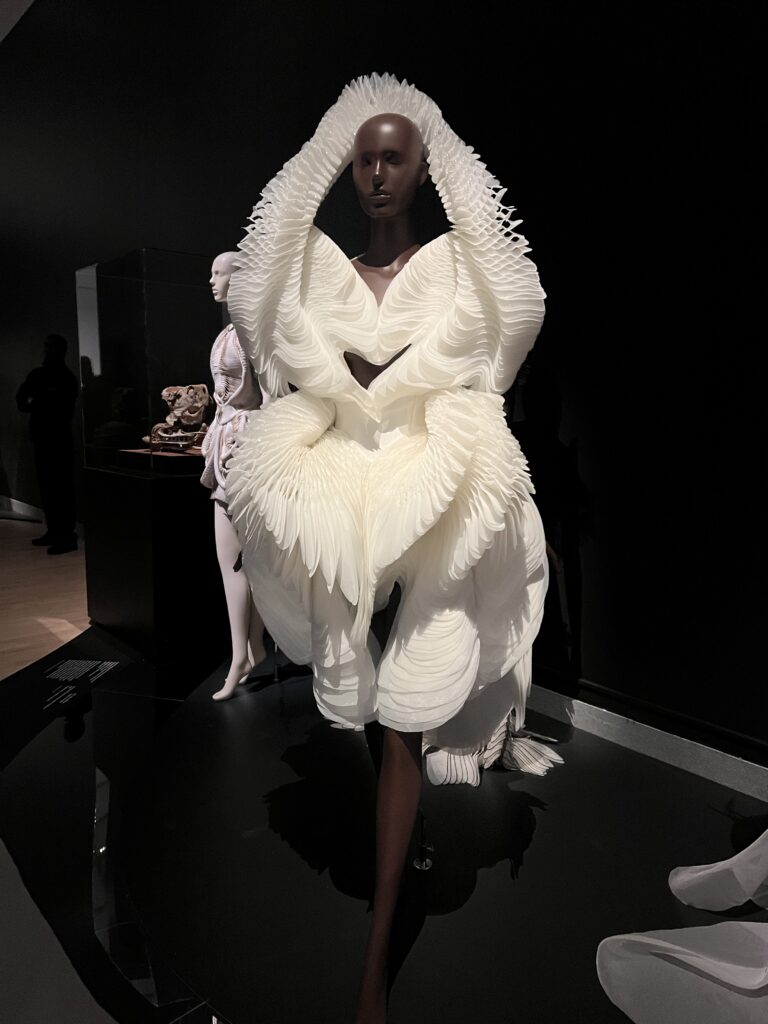
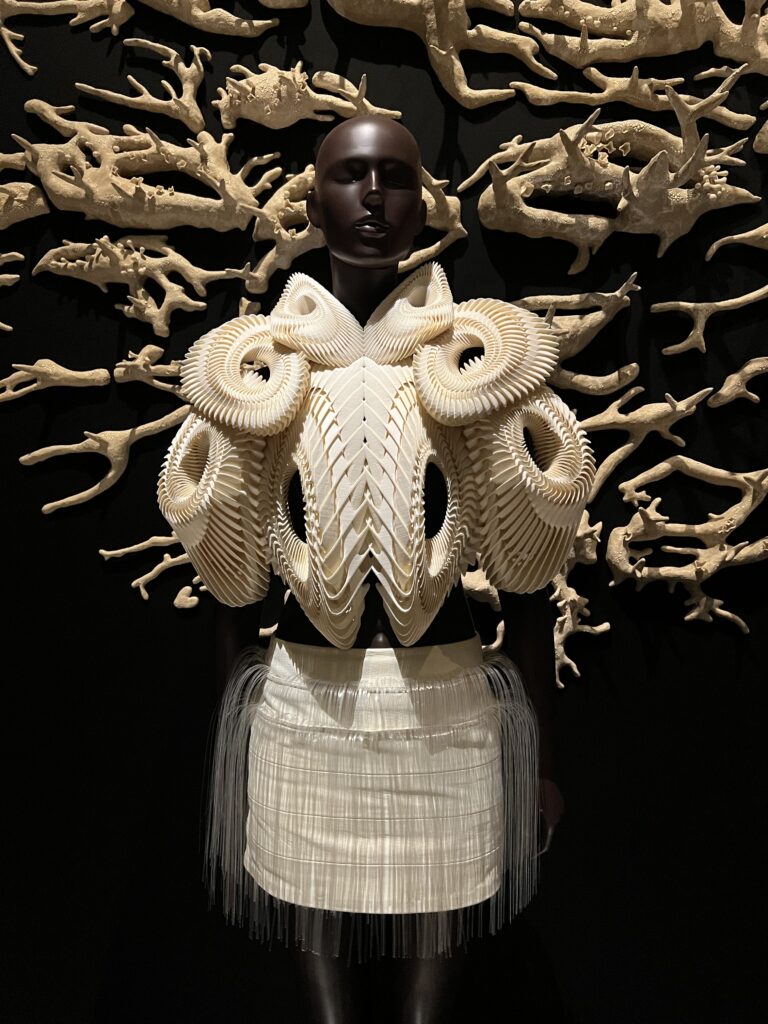
Iris van Herpen fused technology with artisanal craftsmanship to create this memorable piece from her 2021 Haute Couture Spring/Summer collection, Roots of Rebirth. The design draws inspiration from fungi and their intricate underground communication systems known as mycelium networks. At the exhibit, the crown-like headpiece slowly moves around the model’s face, giving the illusion that the fungi-inspired structure is alive and growing in real time.
The web-like details throughout the design reference mycelium, the underground fungal threads often called the “Wood Wide Web.” These mycorrhizal networks connect the roots of over 80% of plant species, allowing them to exchange water, nutrients, carbon, and minerals through the soil. Acting as a hidden distribution system beneath the earth’s surface, the network symbolizes connection, communication, and survival within ecosystems.
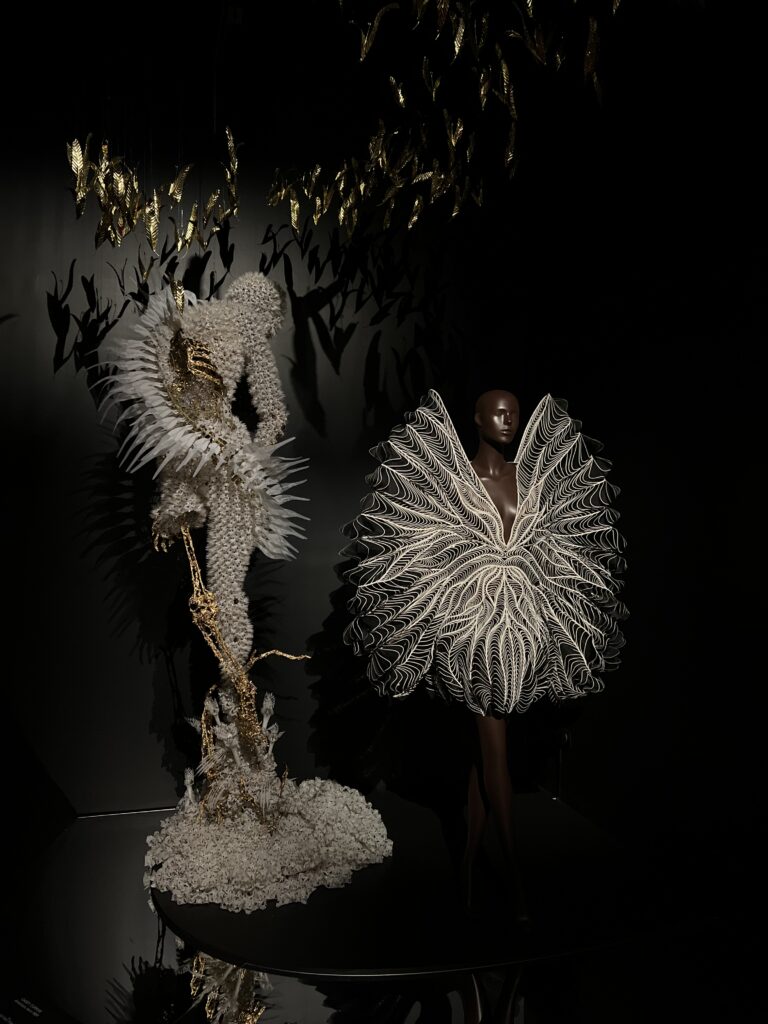
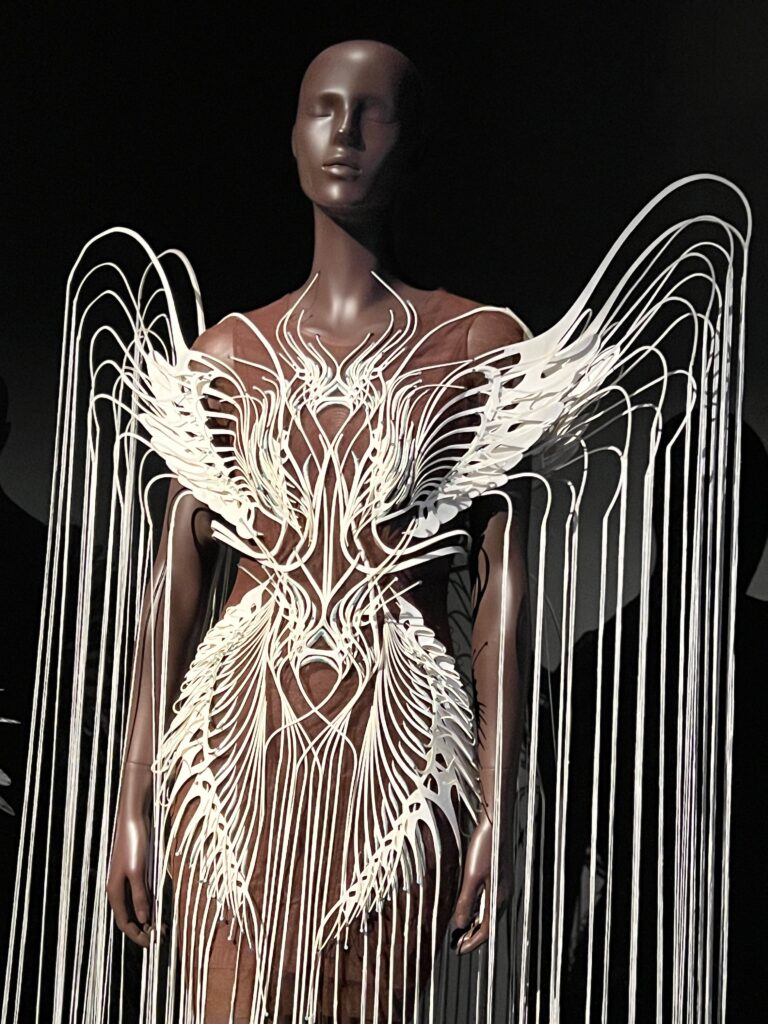
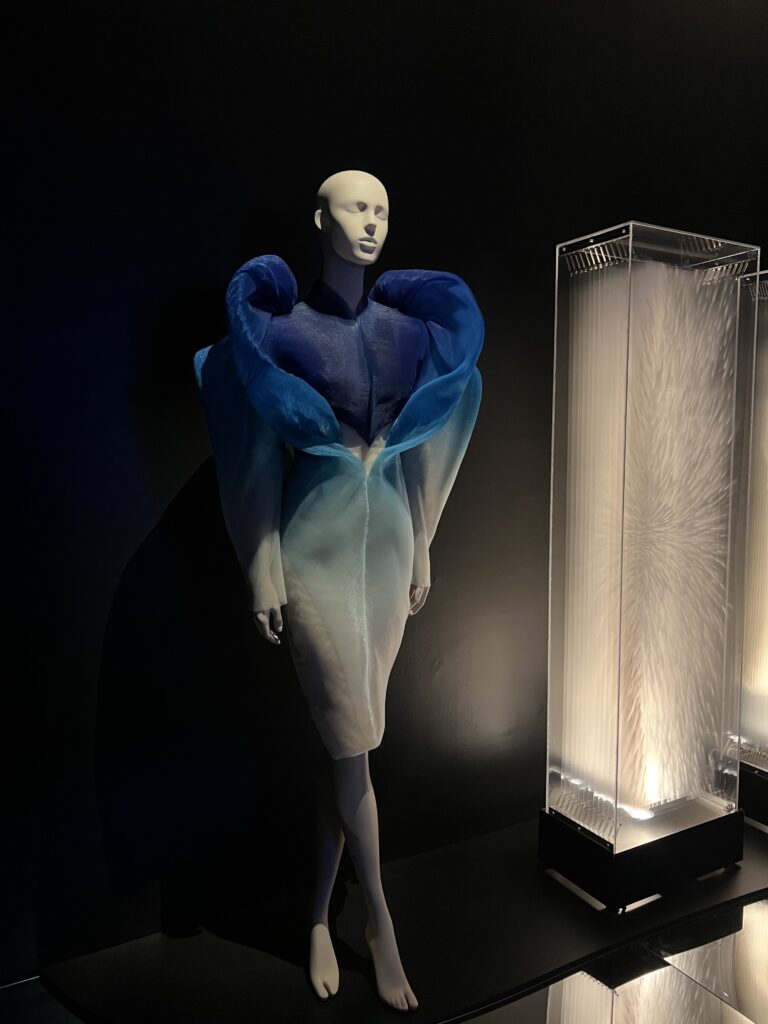
As stated in the exhibit, “The connection between what lies above and below the earth’s surface is symbolized in the Henosis dress, in which translucent layers of white lace, heat-bonded to laser-cut ‘seeds,’ grow outward from a hand-embroidered corset.”
By using technology to animate the crown, van Herpen transforms a scientific concept into wearable art. The slow and fluid movement of the headpiece mimics the natural growth of fungi while still maintaining the delicate appearance of a web. The piece feels futuristic while remaining deeply connected to the hidden systems that sustain life beneath the earth’s surface.
Roots of Rebirth Collection – SS21
Sensory Seas Collection – SS20
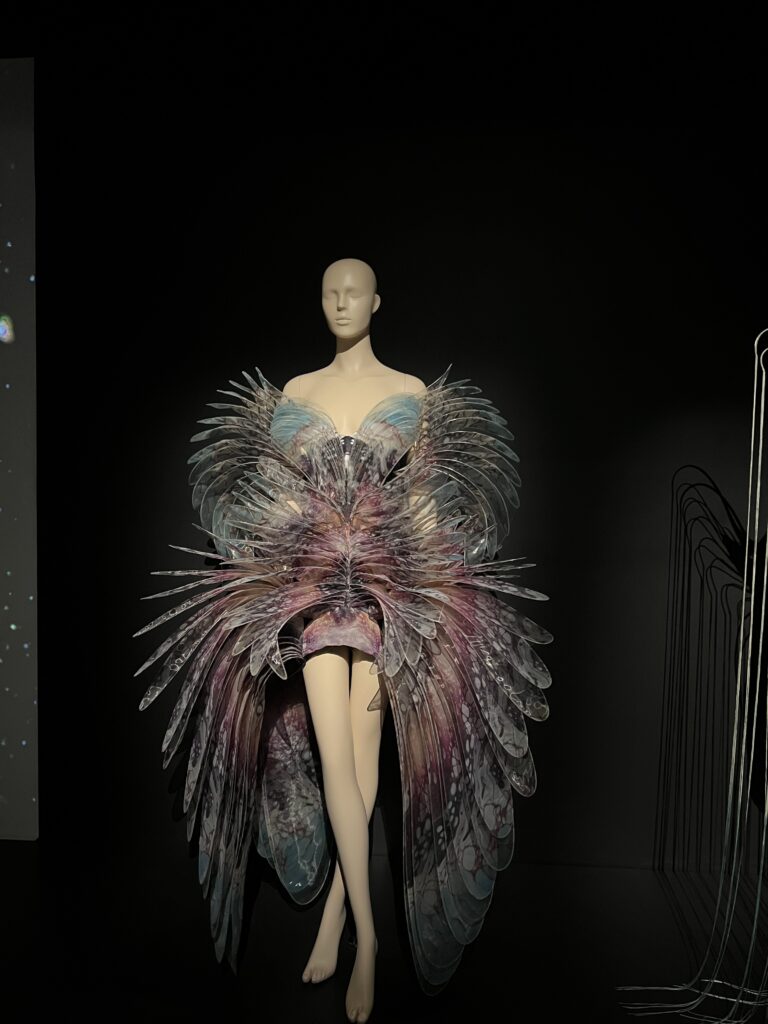
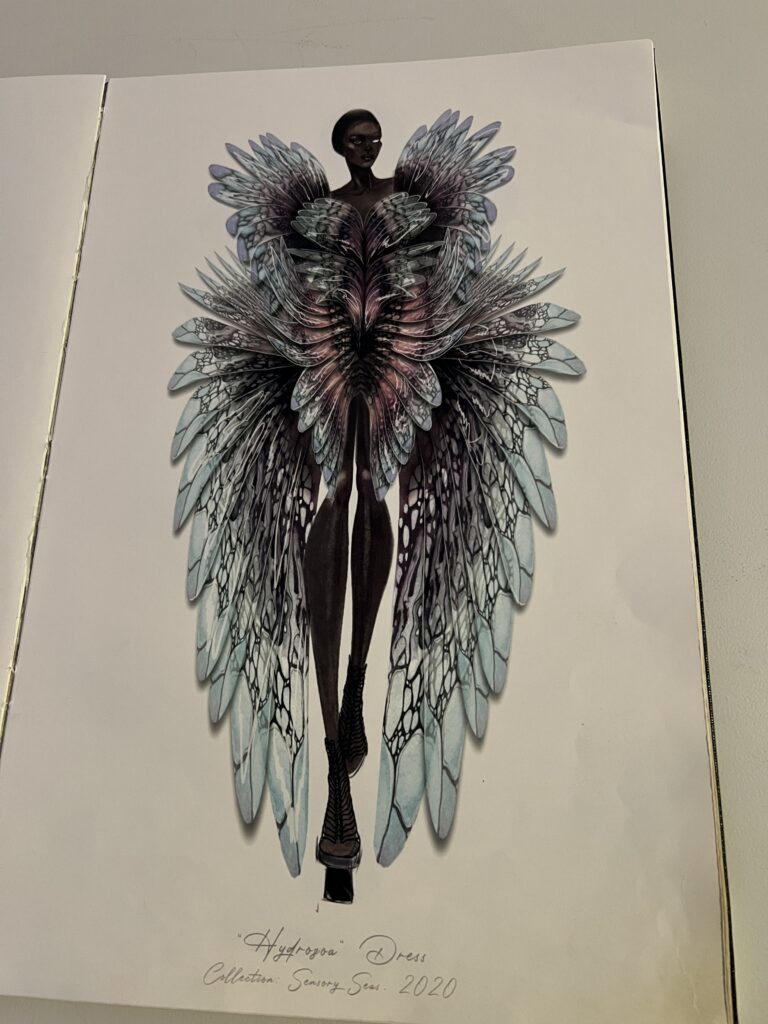
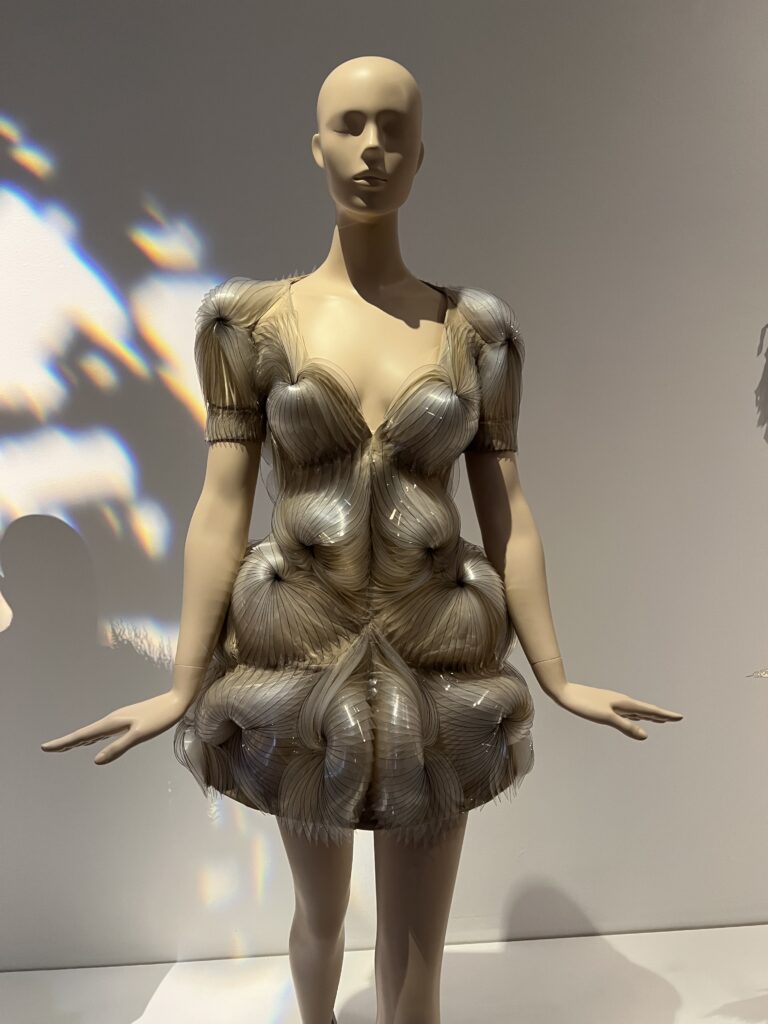
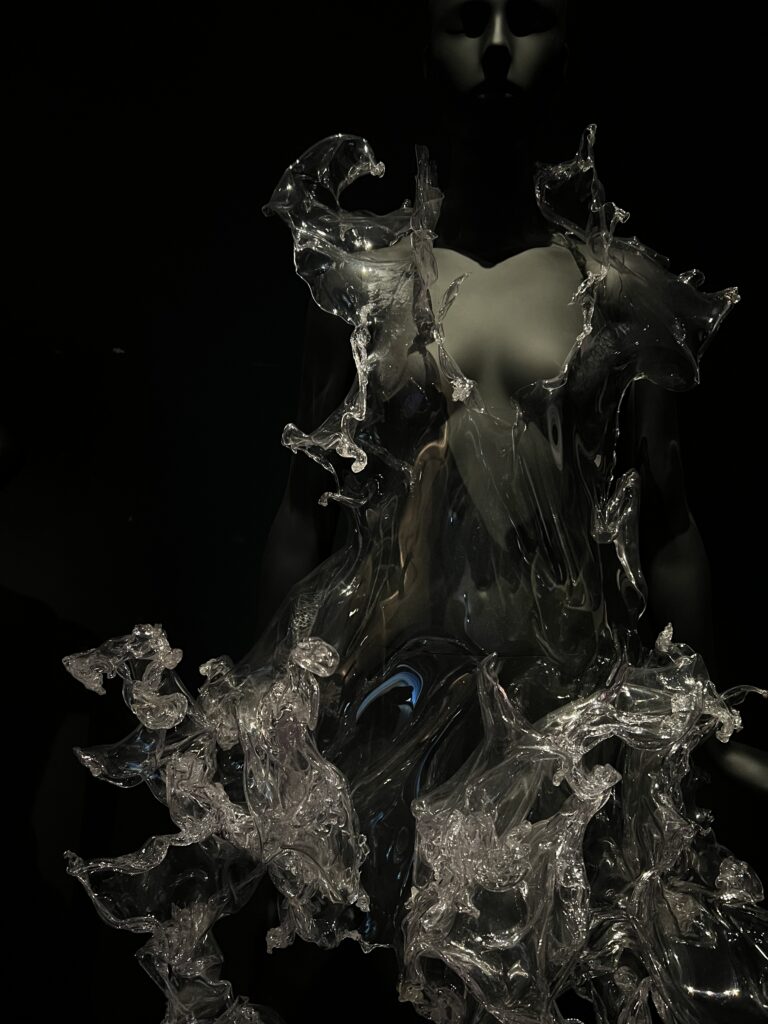
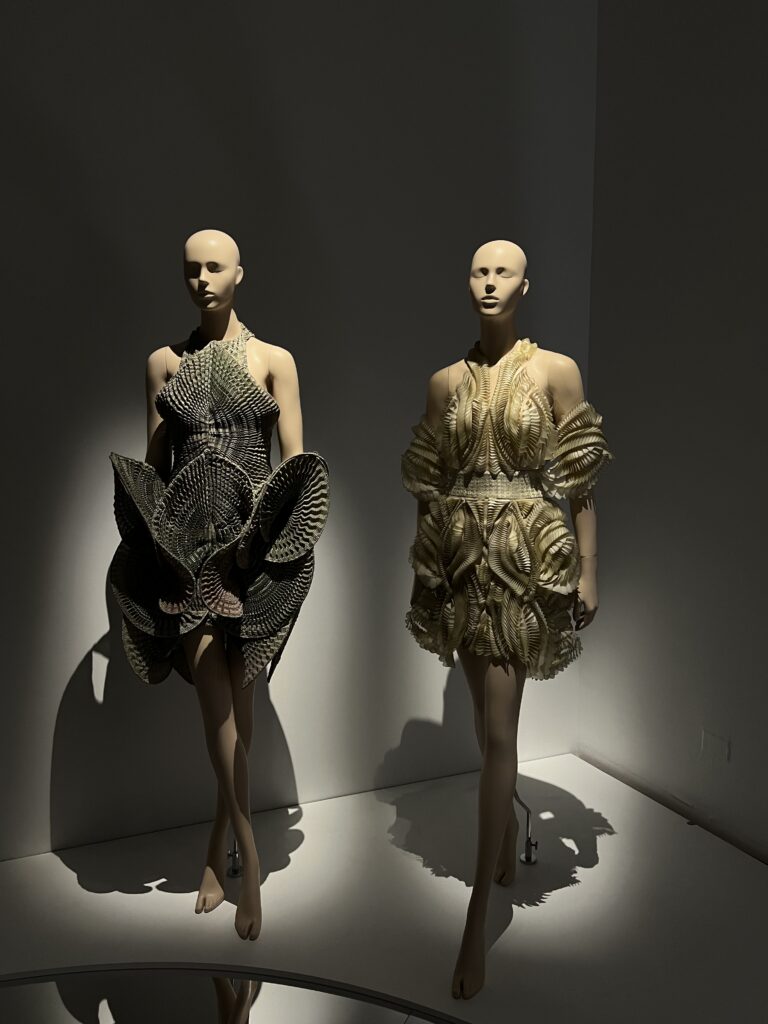
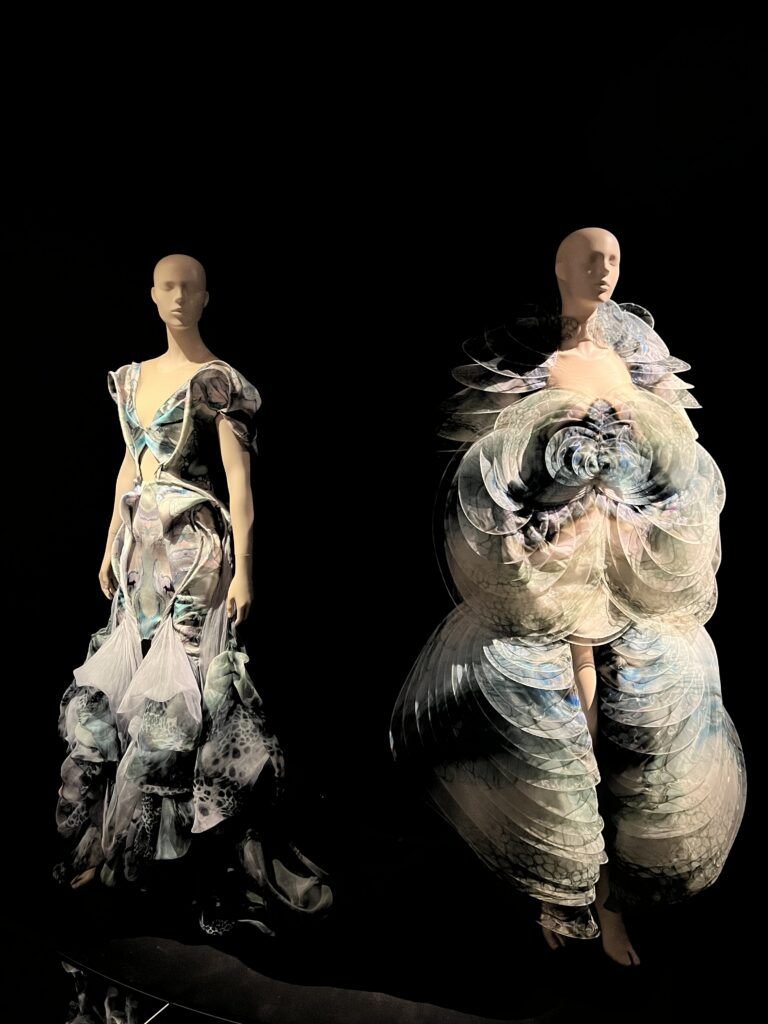
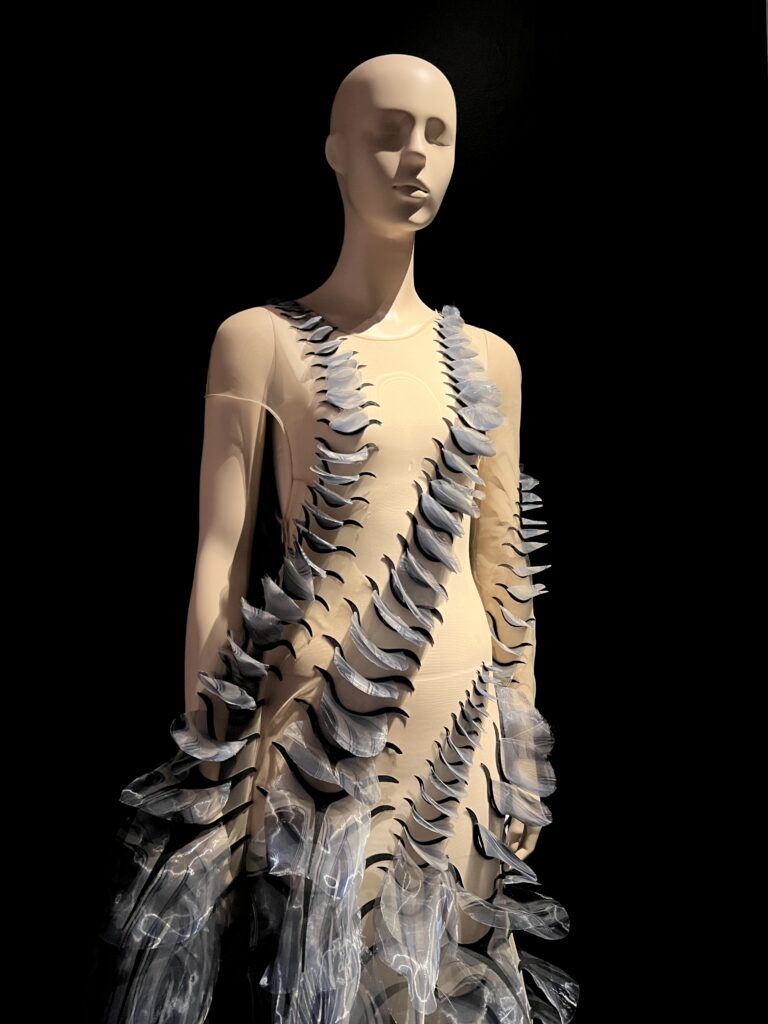
The Hydrozoa dress, part of the Sensory Seas Haute Couture collection, combines scientific innovation with intricate craftsmanship. The piece was created using laser-cut PETG arches that were heat-bonded onto layers of digitally printed glass organza made from synthetic threads thinner than human hair. Van Herpen drew inspiration from ocean life, particularly the way coral and underwater organisms sway back and forth with the movement of the sea.
Through advanced techniques and delicate construction, the dress transforms marine movement into wearable art.
Not only did the color and silhouette immediately catch my attention, but the movement of the garment did as well. As the air from the room flowed through the laser-cut arches, the dress gently swayed and bounced, mimicking the motion of underwater coral currents. Watching the piece move made it feel less like a garment and more like a living sculpture.
Visitor Experience
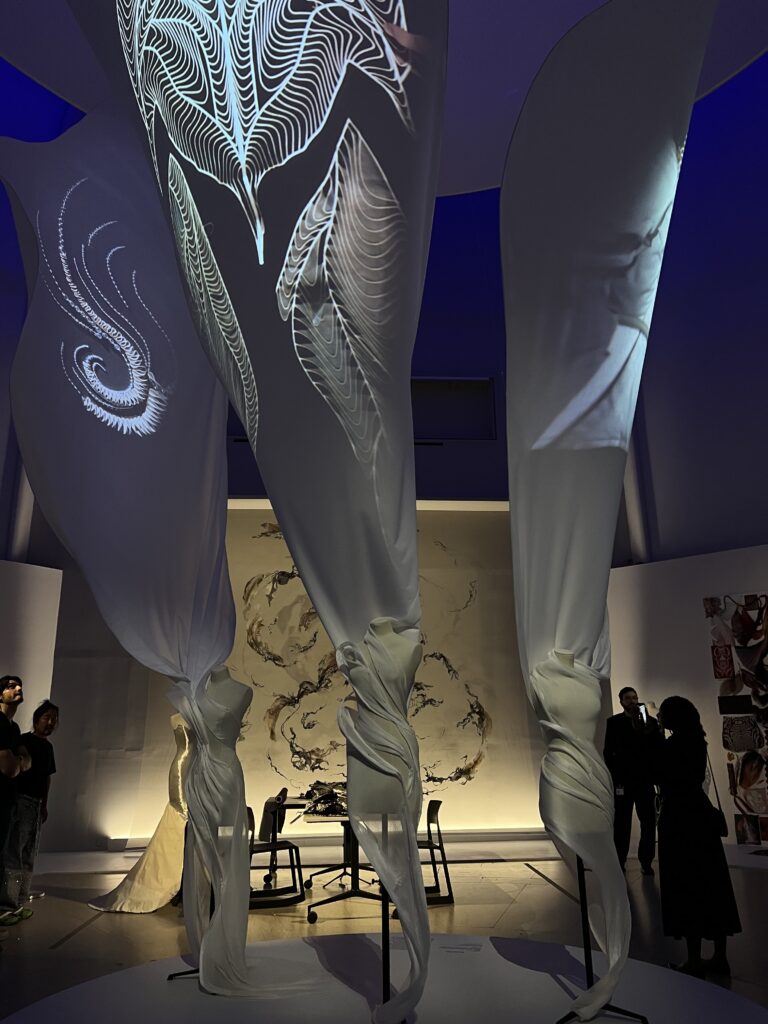
Experiencing this exhibit was visually striking. The flow of the exhibition, the immersive sounds surrounding the garments, and the behind-the-scenes videos showing how the pieces were constructed made the experience especially memorable. However most memorable part of the exhibit was not just the garments themselves or the explanations behind the concepts, but the immersive section dedicated to Iris van Herpen’s creative process and studio. One room gave guests a look inside van Herpen’s mind, featuring videos of the garments being made alongside fabric swatches that visitors could touch and interact with. Being able to feel the textures and materials up close created a deeper connection to the craftsmanship behind each piece.
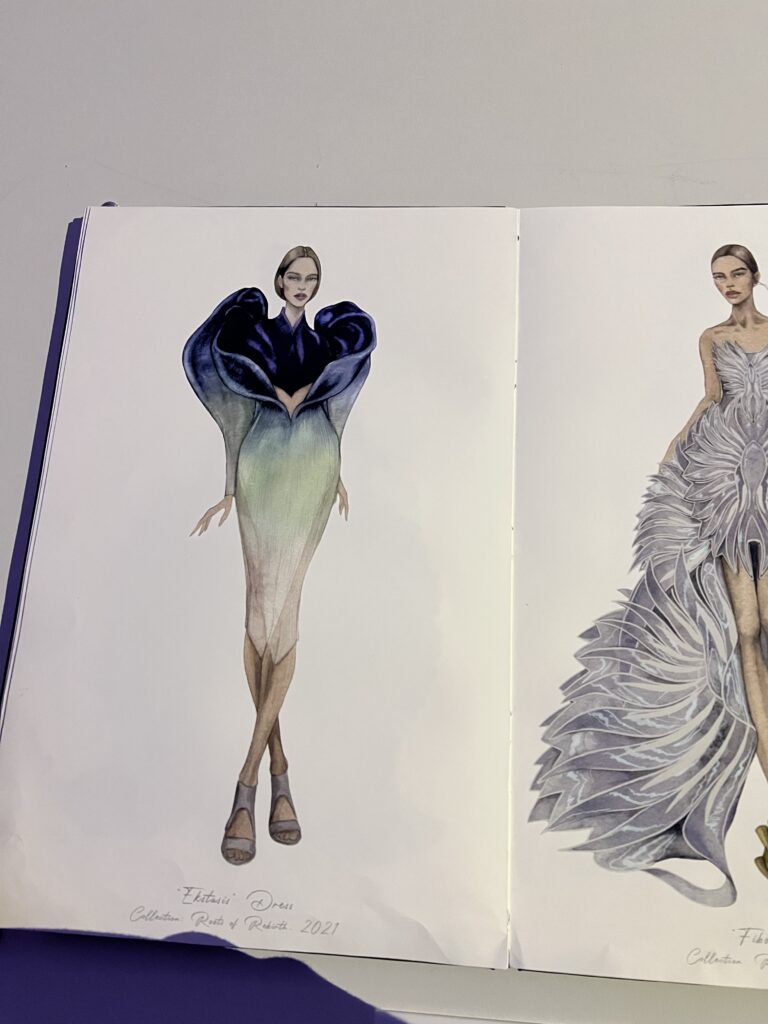
The exhibit also featured entire walls dedicated to the materials van Herpen used throughout her collections. Telescopes were placed throughout the space, highlighting the scientific and natural references that inspire her avant-garde designs. Another fascinating glimpse into her creative process was the display of her sketchbook, which showcased her original drawings and early concepts for the garments.
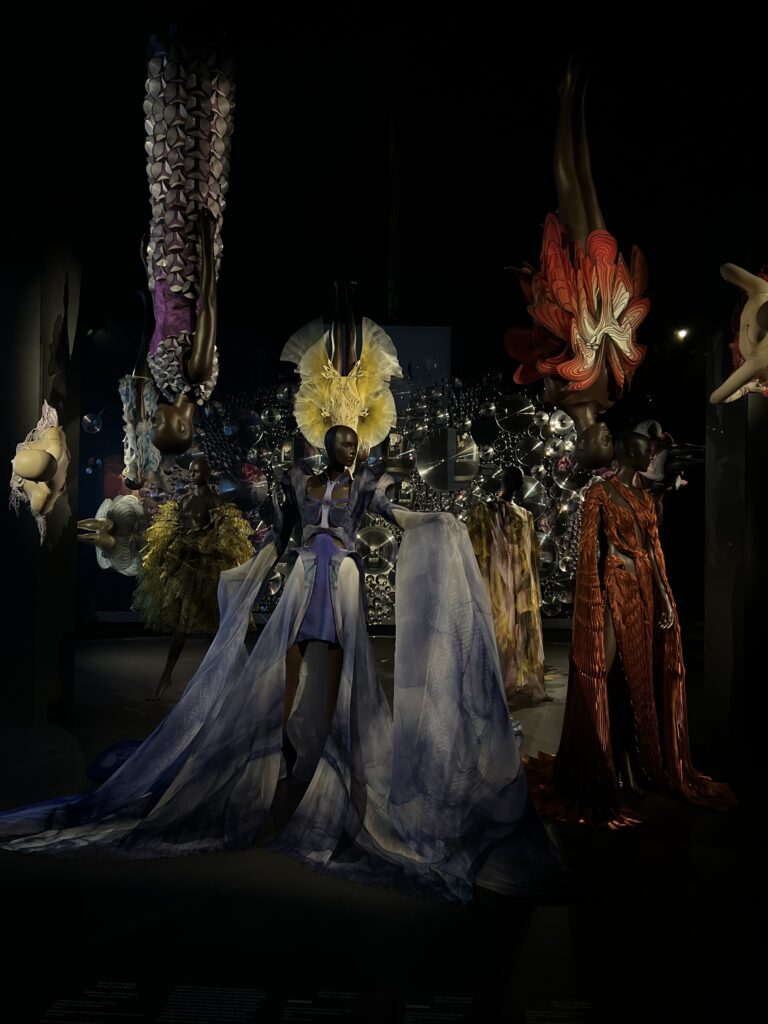
One of my favorite moments from the exhibit was towards the end, where multiple designs were displayed on mannequins positioned at different angles – some turned sideways and others upside down. The bright, vibrant colors of the gowns completely filled the room and made you feel immersed within the collections themselves. It became clear that Iris van Herpen is not just a fashion designer, but an artist who transforms science, movement, and natural phenomena into one-of-a-kind wearable sculptures.
Sculpting the Senses Gallery: